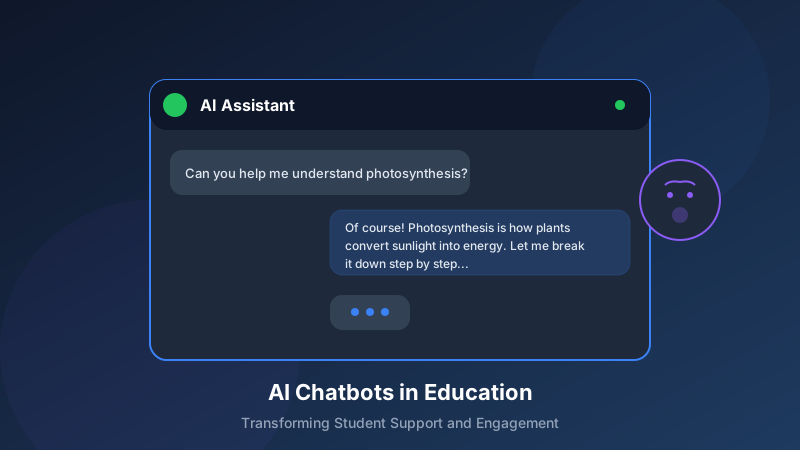
How AI Chatbots Are Reshaping Student Support Services
Artificial intelligence is transforming student support in education. From answering common questions to providing personalized guidance, AI chatbots are becoming essential tools for learning centers, schools, and universities. This analysis explores the current state, benefits, challenges, and future of AI-powered student support.
The Rise of AI in Education Support
Why Now?
Several factors are driving AI chatbot adoption in education:
Technology Advances:
Natural language processing has improved dramaticallyLarge language models understand context betterIntegration with existing systems is easierCloud deployment reduces infrastructure needsChanging Expectations:
Students expect instant, 24/7 responsesParents want convenient self-service optionsStaff are overwhelmed with routine queriesCompetition requires service differentiationEconomic Pressures:
Labor costs continue to riseStaff shortages affect support capacityBudget constraints limit hiringEfficiency gains are essentialCurrent State of AI in Education
AI chatbots in education range from simple to sophisticated:
Basic Chatbots:
Scripted responses to common questionsMenu-driven navigationKeyword matchingLimited conversation capabilityAdvanced AI Assistants:
Natural language understandingContext-aware responsesPersonalization based on user dataContinuous learning and improvementEmerging Capabilities:
Integration with learning systemsProactive outreach and interventionEmotional intelligenceMultimodal interaction (voice, text, image)How AI Chatbots Support Students
1. Information and FAQ
The most common use case:
Common Queries Handled:
Program and course informationScheduling and availabilityPricing and payment optionsLocation and contact detailsPolicies and proceduresBenefits:
Instant responses any timeConsistent accurate informationReduced staff workloadImproved user experience2. Enrollment and Onboarding
Guiding prospective and new students:
Enrollment Support:
Answer questions about programsGuide through application processSchedule assessments or toursFollow up with prospectsOnboarding Assistance:
Welcome new studentsExplain expectations and proceduresHelp with setup tasksIntroduce resources and support3. Scheduling and Administrative
Handling routine transactions:
Scheduling Support:
View available timesBook or reschedule sessionsSend remindersHandle cancellationsAdministrative Tasks:
Update contact informationRequest documentsCheck account statusSubmit forms4. Academic Support
Emerging educational applications:
Learning Assistance:
Answer content questionsExplain conceptsProvide practice problemsSuggest resourcesProgress Monitoring:
Check grades and progressReview upcoming assignmentsIdentify areas for improvementConnect to additional support5. Wellness and Support
Supporting the whole student:
Mental Health:
Initial screening and triageCoping strategies and resourcesConnection to human supportCrisis identification and escalationGeneral Support:
Check-in conversationsEncouragement and motivationProblem-solving assistanceReferral to appropriate servicesBenefits of AI Chatbots
For Students and Families
Convenience:
24/7 availabilityInstant responsesNo wait timesSelf-service capabilityExperience:
Consistent qualityNon-judgmental interactionPersonalized responsesMultiple language supportFor Staff
Workload Reduction:
Fewer routine queries to handleMore time for complex issuesFocus on high-value activitiesReduced burnoutEnhanced Capability:
Better information for decisionsEarly warning of student needsInsights from conversation dataSupport for relationship buildingFor Organizations
Efficiency:
Lower cost per interactionScalable support capacityConsistent service deliveryData-driven improvementStrategic Value:
Competitive differentiationImproved student outcomesBetter retention ratesEnhanced reputationChallenges and Considerations
Technical Challenges
Accuracy and Reliability:
Incorrect responses damage trustEdge cases are difficultIntegration with data sourcesKeeping information currentUser Experience:
Natural conversation flowHandling ambiguityGraceful failure modesSeamless human handoffEthical Considerations
Privacy and Data:
Student data protectionConversation loggingData use and retentionConsent and transparencyEquity and Access:
Digital divide concernsLanguage and literacy barriersDisability accessibilityCultural appropriatenessAppropriate Use:
What should AI not handle?Human connection importanceOver-reliance risksTransparency about AIImplementation Challenges
Organizational Readiness:
Change management needsStaff concerns and resistanceTraining requirementsProcess redesignPractical Considerations:
Platform selectionIntegration complexityOngoing maintenanceCost and ROI measurementImplementation Best Practices
Planning and Design
Start with Use Cases:
Identify highest-value applicationsMap current support processesDefine success metricsPlan phased rolloutDesign for Users:
Understand user needs and preferencesTest with real usersPlan for accessibilityConsider cultural factorsDevelopment and Integration
Content and Training:
Develop comprehensive knowledge baseTrain on real conversationsPlan for edge casesEstablish update processesTechnical Integration:
Connect to existing systemsEnable personalizationPlan for scaleMonitor performanceDeployment and Operations
Launch Strategy:
Pilot with limited usersGather feedback and iterateExpand graduallyCommunicate changesOngoing Management:
Monitor conversations regularlyAnalyze performance dataUpdate content continuouslyImprove based on feedbackHuman-AI Collaboration
Seamless Handoff:
Clear escalation triggersSmooth transition experienceContext transfer to humansFollow-up and closureStaff Enablement:
Train staff on AI capabilitiesIntegrate AI insights into workflowsMaintain human expertiseCelebrate human-AI successCase Studies
Learning Center Network
Situation: Multi-location tutoring business struggling with phone volume
Solution: Deployed AI chatbot for scheduling and FAQs
Results:
60% reduction in routine phone calls24/7 scheduling availability35% increase in online enrollment conversionStaff refocused on student relationshipsOnline Education Platform
Situation: Growing student body overwhelming support team
Solution: Comprehensive AI assistant for student support
Results:
80% of queries handled without human interventionAverage response time: 10 seconds (vs. 4 hours)Student satisfaction increased 25%Support costs reduced 40%The Future of AI in Student Support
Emerging Trends
Personalization:
Conversations tailored to individual studentsProactive outreach based on patternsIntegration with learning dataPredictive supportMultimodal Interaction:
Voice assistantsVideo avatarsAR/VR integrationMulti-channel continuityDeeper Integration:
Connection to learning systemsReal-time academic supportBehavioral and emotional insightsHolistic student supportPreparing for the Future
For Education Leaders:
Stay informed about AI developmentsPilot emerging technologiesInvest in data infrastructureDevelop AI governance frameworksFor the Industry:
Establish ethical guidelinesShare best practicesAddress equity concernsAdvocate for appropriate regulationConclusion
AI chatbots are reshaping student support in education, offering unprecedented convenience, efficiency, and personalization. While challenges remain around accuracy, ethics, and implementation, the trajectory is clear: AI will play an increasingly central role in how educational institutions serve students and families.
The organizations that thrive will be those that thoughtfully integrate AI with human support, using technology to enhance—not replace—the human connections that make education meaningful. Paired with a comprehensive CRM and LMS, chatbots can become a seamless part of the student experience.