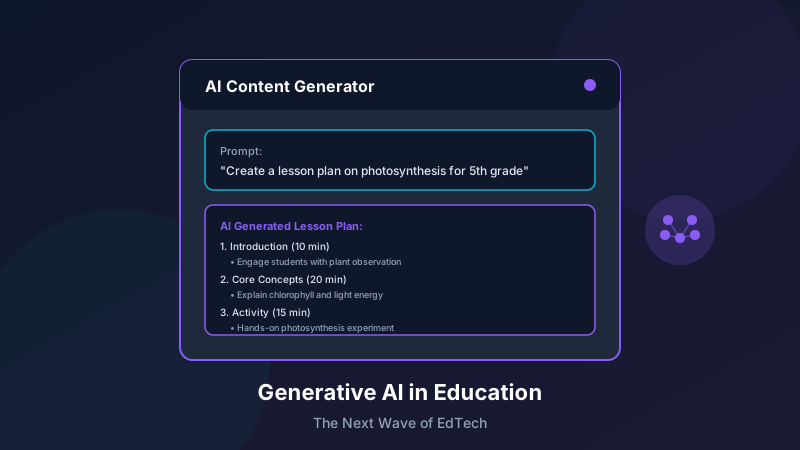
How Generative AI Is Transforming Content Creation in Education
Generative artificial intelligence has emerged as one of the most transformative technologies in education, fundamentally changing how educational content is created, customized, and delivered. From automated lesson plan generation to personalized learning materials, AI is reshaping the landscape of educational content development.
The Rise of Generative AI in Education
What Is Generative AI?
Generative AI refers to artificial intelligence systems capable of creating new content:
Core Capabilities
Text generation for educational materialsImage creation for visual learning aidsCode generation for programming educationAudio synthesis for language learningVideo script development and storyboardingKey Technologies
Large Language Models (LLMs) like GPT-4 and ClaudeImage generation tools like DALL-E and MidjourneyCode assistants like GitHub CopilotVoice synthesis and text-to-speech systemsMultimodal AI combining multiple capabilitiesWhy Education Is Embracing AI
The education sector faces unique challenges AI can address:
Content Demands: Need for diverse, updated materialsPersonalization Pressure: Every student learns differentlyResource Constraints: Limited time and budget for content creationAccessibility Requirements: Materials needed in multiple formatsRapid Change: Curriculum must evolve with industry needsAI Applications in Educational Content
Curriculum Development
Streamlining curriculum creation processes:
Lesson Planning
Generate lesson outlines from learning objectivesCreate differentiated activities for various levelsDevelop assessment items aligned to standardsProduce teacher guides and instructional notesUnit Design
Build comprehensive unit plans efficientlyEnsure standards alignment across materialsCreate pacing guides and calendarsDevelop cross-curricular connectionsResource Generation
Produce worksheets and practice materialsCreate graphic organizers and study guidesGenerate vocabulary lists and definitionsDevelop rubrics and assessment criteriaPersonalized Learning Materials
Tailoring content to individual needs:
Adaptive Content
Adjust reading levels automaticallyModify complexity based on student performanceGenerate additional practice for struggling areasCreate extension activities for advanced learnersLearning Preferences
Produce visual, auditory, and kinesthetic versionsCreate multiple explanation approachesGenerate examples relevant to student interestsDevelop culturally responsive content variationsAccessibility Adaptations
Generate simplified language versionsCreate audio descriptions for visualsProduce large-print and screen-reader-friendly formatsDevelop translations for multilingual learnersAssessment Creation
Revolutionizing evaluation materials:
Question Generation
Create aligned assessment items quicklyGenerate multiple question types and formatsProduce distractor options for multiple choiceDevelop rubrics for open-ended responsesFeedback Automation
Provide instant feedback on student workGenerate personalized improvement suggestionsCreate detailed scoring explanationsProduce formative assessment commentsItem Analysis
Identify question quality issuesSuggest improvements for clarityEnsure difficulty distributionCheck for bias and fairnessBenefits of AI-Generated Content
Efficiency Gains
Significant time savings for educators:
Content Production
Generate first drafts in minutes, not hoursQuickly adapt materials for different contextsRapidly update content for accuracyEfficiently produce variations and alternativesQuality Improvements
Consistent formatting and structureThorough coverage of learning objectivesReduced errors through AI assistanceBetter alignment to standardsPersonalization at Scale
Achieving truly individualized learning:
Every Student Served
Generate unique learning pathsCreate materials at appropriate levelsProduce content matching interestsDevelop culturally relevant examplesReal-Time Adaptation
Adjust content based on performance dataGenerate intervention materials instantlyCreate enrichment opportunities automaticallyProduce remediation resources as neededTeacher Empowerment
Supporting rather than replacing educators:
Enhanced Creativity
More time for instructional designFocus on high-level pedagogical decisionsOpportunity to innovate and experimentReduced administrative burdenProfessional Growth
Learn from AI-generated examplesDiscover new instructional approachesAccess best practices efficientlyBuild personal resource librariesImplementation Considerations
Quality Assurance
Ensuring AI content meets standards:
Human Review Requirements
Educators must review all AI contentCheck for accuracy and appropriatenessVerify alignment to learning objectivesEnsure cultural sensitivityAccuracy Verification
Fact-check AI-generated informationVerify source citations when providedCross-reference with authoritative sourcesUpdate outdated informationPedagogical Review
Confirm age-appropriatenessCheck developmental suitabilityVerify instructional sequence logicEnsure engagement factors presentEthical Considerations
Navigating responsible AI use:
Transparency
Disclose AI use in content creationExplain AI's role to stakeholdersDocument which content is AI-assistedMaintain honesty about limitationsIntellectual Property
Understand copyright implicationsRespect content ownership rightsAvoid plagiarism and duplicationFollow organizational policiesBias Awareness
Recognize potential AI biasesReview for stereotypes and assumptionsEnsure diverse representationCorrect problematic outputsTechnical Requirements
Infrastructure needs for AI adoption:
Platform Access
Select appropriate AI toolsSecure necessary licensesEnsure reliable connectivityProvide adequate computing resourcesIntegration Capabilities
Connect with existing systems like your LMSEnable content workflow integrationSupport multiple output formatsAllow collaboration featuresData Security
Protect student informationComply with privacy regulationsSecure AI system accessMonitor usage patternsBest Practices for AI Content Creation
Effective Prompting
Getting better outputs from AI:
Clear Instructions
Specify grade level and subjectDefine learning objectives preciselyIndicate desired format and lengthRequest specific content elementsContext Provision
Share relevant curriculum standardsProvide sample successful contentExplain student population needsDescribe instructional contextIterative Refinement
Review and request improvementsBuild on successful outputsLearn from less effective resultsDocument effective prompt patternsWorkflow Integration
Embedding AI into content processes:
Development Phases
Use AI for initial draftsHuman refinement and improvementCollaborative editing and reviewFinal quality assuranceCollaboration Models
Teams share effective promptsBuild institutional knowledge basesCreate content templates togetherEstablish review processesVersion Control
Track AI-generated versionsDocument human modificationsMaintain revision historiesEnable content rollbackContinuous Improvement
Enhancing AI use over time:
Feedback Collection
Gather educator experiencesTrack student engagement dataDocument quality issuesIdentify improvement opportunitiesSkill Development
Train staff on AI toolsShare best practices regularlyUpdate prompting strategiesEvaluate new AI capabilitiesFuture Directions
Emerging Capabilities
What's coming in AI for education:
Multimodal Content
Integrated text, image, and video generationInteractive content creationImmersive learning experiencesAdaptive multimedia materialsReal-Time Personalization
Instant content modificationLive learning path adjustmentDynamic assessment adaptationImmediate intervention generationCollaborative AI
Student-AI content co-creationPeer learning facilitationGroup project supportCommunity knowledge buildingPreparing for Change
Staying ready for AI evolution:
Continuous Learning
Monitor AI developmentsExperiment with new toolsBuild adaptive capabilitiesMaintain flexibilityStrategic Planning
Develop AI integration roadmapsBudget for technology investmentsPlan professional developmentCreate governance frameworksConclusion
Generative AI is transforming educational content creation, offering unprecedented opportunities for efficiency, personalization, and quality. While AI will not replace the essential role of human educators, it provides powerful tools for enhancing their work and reaching every student more effectively.
Success with AI-generated content requires thoughtful implementation, robust quality assurance, and ongoing professional development. Educational organizations—from learning centers to online tutoring providers—that embrace these tools strategically while maintaining focus on learning outcomes will be best positioned to serve their students in the AI-enhanced future of education.