Transforming Student Outcomes with Data-Driven Interventions
When Evergreen Learning Centers committed to becoming truly data-driven, they didn't just implement new software—they transformed their entire approach to student support. This case study explores how systematic data collection and analysis led to targeted interventions that improved student outcomes across all demographics.
The Starting Point
The Challenge
Evergreen operated 12 tutoring centers serving 2,400 students. Despite quality instruction, outcomes were inconsistent:
68% of students meeting learning goals (below target of 80%)Significant achievement gaps by demographic groupReactive approach—catching struggling students too lateStaff relying on intuition rather than data for decisionsThe Vision
Leadership committed to a data-informed approach:
Early identification of students at riskPersonalized intervention strategiesEquitable outcomes across all groupsContinuous improvement cultureBuilding the Data Infrastructure
Phase 1: Data Collection
Establishing what to measure:
Learning Progress Data
Weekly skill assessments for all studentsCurriculum progression trackingAssignment completion ratesMastery demonstration indicatorsEngagement Data
Attendance patternsSession participation levelsTime-on-task metricsStudent self-reported effortContextual Data
Student demographicsProgram type and intensityInstructor assignmentsFamily engagement levelsPhase 2: Integration and Dashboard Development
Making data accessible and actionable:
Unified Student Profiles
All data points in one viewHistorical trends visibleAlert indicators for at-risk statusIntervention history trackingRole-Specific Dashboards
Instructor view: Immediate student needsCenter manager view: Location-wide patternsLeadership view: Organization trendsParent view: Individual student progressAutomated Reporting
Daily attendance and engagement summariesWeekly progress updatesMonthly outcome reportsQuarterly equity analysesDeveloping the Early Warning System
Identifying Risk Factors
Analysis revealed key predictors of poor outcomes:
High-Impact Indicators
Two or more absences in a monthDeclining assessment scores over two weeksIncomplete homework for two consecutive sessionsNegative engagement rating from instructorModerate-Impact Indicators
Missed make-up sessions not rescheduledParent communication non-responseAttendance at less than 75% of scheduled sessionsBelow-average time-on-task metricsContextual Factors
New student (first 60 days)Recent life disruption (family change, school transition)Multiple instructors in short periodProgram mismatch (level too high or low)The Risk Scoring Model
Combining factors into actionable alerts:
Risk Level Calculation
Weighted points for each indicatorRolling 30-day window for most factorsImmediate triggers for acute concernsAdjustment for contextual factorsAlert Tiers
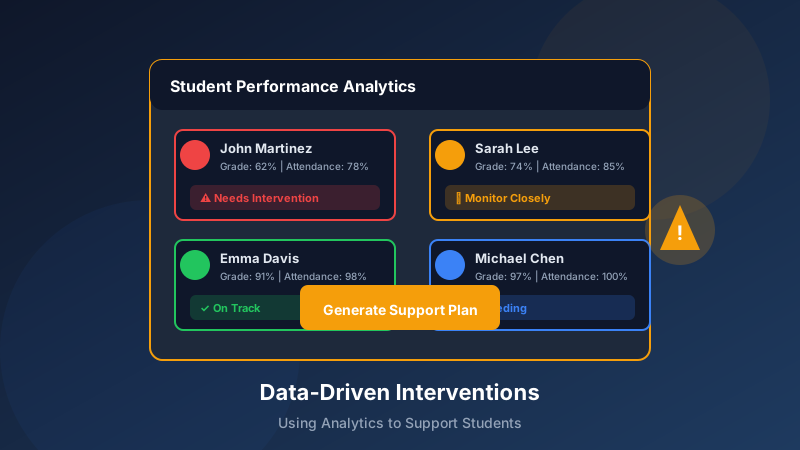
Green: On track (no intervention needed)Yellow: Monitor closely (preventive outreach)Orange: At risk (intervention required within 48 hours)Red: Critical (immediate intervention and escalation)Intervention Framework
Tiered Support Model
Matching intervention intensity to need:
Tier 1: Universal Support
Applied to all students:
Clear learning goals and progress visibilityRegular feedback and encouragementParent communication at set intervalsHigh-quality core instructionTier 2: Targeted Intervention
For yellow and orange alerts:
Additional practice on struggling areasModified instruction pace or approachIncreased check-ins and encouragementParent conference to align home supportTier 3: Intensive Support
For red alerts and persistent challenges:
Comprehensive learning assessmentIndividualized intervention planIncreased session frequency or durationPossible program or level adjustmentCoordinated family support planIntervention Protocols
Specific responses for common patterns:
Attendance Decline Protocol
Day 1 of missed session: Automated parent notificationSecond missed session in month: Personal outreach from instructorThird missed session: Center manager call to familyFourth or more: Home visit or intensive family meetingAssessment Score Decline Protocol
First week of decline: Instructor reviews and adjusts approachSecond week of decline: Diagnostic assessment administeredContinued decline: Specialist consultation and plan adjustmentNo improvement in 30 days: Comprehensive reassessmentEngagement Decline Protocol
Initial concern: Instructor check-in conversationContinued concern: Modified activities to increase engagementPersistent issue: Student goal-setting meetingNo improvement: Family meeting and potential program adjustmentImplementation Journey
Staff Training
Preparing the team for data-driven work:
Technical Training
Dashboard navigationReport interpretationData entry accuracyAlert response proceduresMindset Shift
From intuition to evidenceFrom reactive to proactiveFrom individual expertise to system supportFrom blame to problem-solvingPractice and Coaching
Scenario-based trainingShadowing experienced usersRegular feedback on data useRecognition of data-informed decisionsChange Management
Addressing resistance and building buy-in:
Addressing Concerns
"I know my students better than data"—positioned data as supplemental"This will take too much time"—automated what could be automated"This is just monitoring staff"—focused on student support purpose"Data doesn't capture everything"—acknowledged limitations openlyBuilding Enthusiasm
Early wins celebrated publiclyStaff input on system improvementsSuccess stories shared regularlyRecognition for data-driven innovationsContinuous Refinement
Improving the system over time:
Regular Review Cycles
Weekly data quality checksMonthly intervention effectiveness analysisQuarterly model accuracy assessmentAnnual comprehensive system evaluationFeedback Integration
Staff suggestions for system improvementsParent feedback on communicationStudent input on interventionsResearch on best practicesResults and Impact
Overall Outcome Improvement
After 18 months of full implementation:
Primary Metrics
Students meeting learning goals: 68% → 84%Students at risk: 25% → 12%Average learning gains: +22% improvementParent satisfaction: 76 → 91 NPSEquity Improvements
Achievement gap by income level: Reduced by 40%Achievement gap by race/ethnicity: Reduced by 35%Students requiring Tier 3 support: Reduced by 50%Time to intervention for at-risk students: 21 days → 4 daysSpecific Intervention Success Rates
Measuring what works:
Attendance Interventions
Personal outreach prevented 70% of further absencesFamily meetings restored regular attendance for 85% of studentsHome visits achieved 95% re-engagement rateAcademic Interventions
Targeted practice closed skill gaps in 75% of cases within 4 weeksInstructor adjustments improved trajectory for 80% of studentsTier 3 interventions showed 90% improvement rateEngagement Interventions
Student goal-setting increased engagement scores by 25%Program adjustments improved engagement for 85% of studentsModified activities showed immediate impact in most casesStaff Effectiveness
How data changed instruction:
Instructors spending 30% less time on administrative tasksMore precise differentiation in sessionsEarlier identification of instructional issuesGreater confidence in intervention decisionsLessons Learned
What Worked Well
Start with Clear Purpose
The focus on student outcomes—not data for its own sake—kept the work meaningful.
Build Data Quality Early
Investing in accurate, complete data collection paid dividends in analysis reliability.
Make Data Accessible
Role-specific dashboards meant people saw what they needed without overwhelm.
Combine Data with Human Judgment
Data informed but didn't replace professional expertise and relationship knowledge.
Challenges Encountered
Initial Data Skepticism
Overcoming "I know better than the numbers" required patience and evidence.
Technical Growing Pains
System integrations took longer than expected; patience was needed.
Alert Fatigue Risk
Too many alerts overwhelmed staff; calibration was necessary.
Equity Data Sensitivity
Disaggregated data required careful framing to avoid reinforcing biases.
Recommendations for Others
Starting a Data-Driven Journey
Begin with end goals in mind—what decisions will data inform?Start simple and add complexity over timeInvest heavily in staff training and change managementBuild in regular review and refinement cyclesCelebrate wins and learn from failures openlyConclusion
Evergreen's transformation demonstrates that data-driven intervention isn't just about technology—it's about culture, processes, and commitment to every student's success. By systematically collecting meaningful data, developing smart early warning systems, and implementing evidence-based interventions, they achieved significant improvements in student outcomes while also advancing equity.
The journey continues. As Evergreen refines their approach, they're exploring predictive analytics to get even further ahead of challenges, and they're sharing their learnings with other learning centers committed to data-informed student support.
For any organization committed to student success, the message is clear: the data to improve outcomes is available. A well-configured student information system and assessment platform provide the foundation. The question is whether we have the commitment to collect it, the systems to analyze it, and the will to act on what it tells us.