Education Technology Predictions for 2026 and Beyond
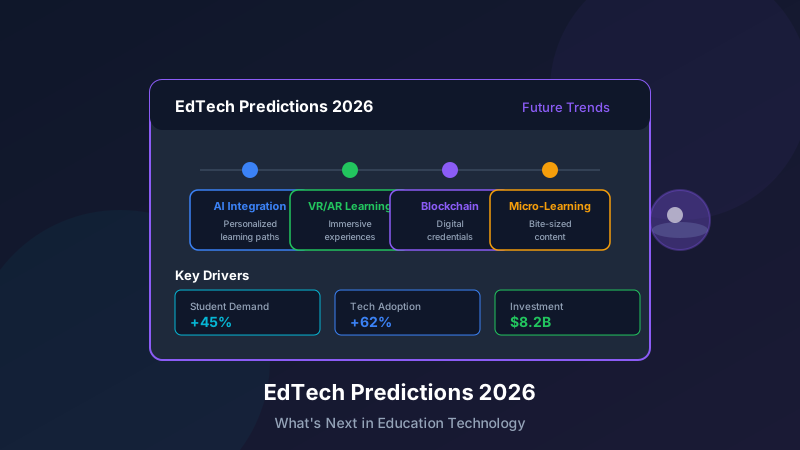
As we approach 2026, the education technology landscape continues to evolve at an unprecedented pace. Drawing on industry trends, technological developments, and expert insights, here are our predictions for what's ahead in EdTech.
The AI Revolution Deepens
Intelligent Tutoring at Scale
AI becomes a true learning companion:
Personal AI Tutors
24/7 availability for student questionsAdaptive explanation approachesInfinite patience for repetitionMulti-subject expertiseCultural and linguistic adaptationCapabilities Expansion
Complex problem-solving guidanceEssay feedback and improvementProject brainstorming and planningStudy strategy coachingEmotional support during strugglesIntegration Reality
Seamless LMS embeddingMobile-first deliveryVoice interaction capabilityMultimodal understandingHuman teacher collaborationAI-Enhanced Content Creation
Transforming curriculum development:
Automated Generation
Lesson plan creationAssessment item generationLearning activity designPractice problem developmentStudy guide productionPersonalization Engine
Individual learning path creationContent difficulty adjustmentInterest-based customizationLearning style adaptationAccessibility modificationQuality Assurance
Bias detection and correctionAccuracy verificationPedagogy evaluationEngagement predictionContinuous improvementImmersive Learning Experiences
Extended Reality Education
Virtual and augmented learning:
Virtual Reality Applications
Historical period immersionScientific concept visualizationDangerous experiment simulationGlobal location explorationCareer pathway experienceAugmented Reality Integration
Textbook enhancementLab procedure overlayAnatomical visualizationArchitectural explorationLanguage learning supportAdoption Acceleration
Decreasing hardware costsImproved comfort and usabilityGrowing content librariesSimplified content creationProven learning outcomesSpatial Computing
Learning in three dimensions:
Collaborative Virtual Spaces
Multi-user learning environmentsObject manipulation togetherPresence and social learningCross-geographic collaborationPersistent learning spacesNew Learning Modalities
3D model creation and manipulationSpatial problem-solvingEmbodied learning experiencesMulti-sensory engagementKinesthetic skill developmentCredentialing Transformation
Skills-Based Recognition
Beyond degrees and certificates:
Micro-Credentials Mainstream
Skill-specific recognitionStackable credentialsRapid skill verificationContinuous learning documentation via assessments and grading toolsEmployer-aligned achievementsVerified Skills Portfolios
Comprehensive skill visualizationMultiple source aggregationEvidence-based demonstrationAI-verified competenciesContinuous updatingHiring System Integration
Direct job matchingSkill gap identificationDevelopment pathway recommendationCredential-to-career mappingContinuous market alignmentBlockchain and Decentralization
Infrastructure evolution:
Decentralized Credentials
Learner-controlled recordsCross-institution verificationFraud-proof documentationLifetime accessibilityPrivacy-preserving sharingSmart Contracts in Education
Automated credential issuanceConditional achievement recognitionCross-institutional agreementsRevenue sharing automationAccess right managementPersonalization at Scale
Hyper-Personalized Learning
Every learner's unique path:
Individual Learning Profiles
Comprehensive learner modelsPreference and style captureProgress and mastery trackingGoal and motivation understandingContext awarenessDynamic Adaptation
Real-time path adjustmentContent difficulty calibrationPacing optimizationFormat variationChallenge balancingPredictive Intervention
Struggle anticipationProactive support deliverySuccess probability modelingEarly warning systemsOptimal intervention timingEmotional Intelligence in EdTech
Technology that understands feelings:
Affective Computing
Engagement state detectionFrustration recognitionMotivation monitoringConfidence assessmentLearning readiness evaluationResponsive Adaptation
Difficulty adjustment based on stressEncouragement timing optimizationBreak recommendationChallenge calibrationSupport escalationWell-Being Integration
Mental health awarenessStudy-life balance supportSocial connection facilitationAnxiety reduction featuresGrowth mindset reinforcementInfrastructure Evolution
Cloud-Native Education
Fully cloud-based learning:
Platform Architecture
Microservices-based designAPI-first developmentReal-time synchronizationGlobal edge distributionInfinite scalabilityData Architecture
Unified learning recordsCross-platform data flowReal-time analyticsPrivacy-by-designInteroperability standard adoptionNetwork Advancements
Connectivity improvements:
5G and Beyond
High-bandwidth content deliveryLow-latency interactive experiencesMobile-first capability expansionRemote area access improvementIoT device proliferationSatellite Internet
Global coverage expansionUnderserved area connectionDisaster resilienceEducational equity advancementGlobal classroom possibilityPrivacy and Security
Data Protection Evolution
Protecting learner information:
Privacy-Preserving AI
Federated learning adoptionDifferential privacy implementationOn-device processingData minimizationConsent management sophisticationSecurity Enhancement
Zero-trust architectureBiometric authenticationContinuous monitoringThreat intelligence integrationIncident response automationRegulatory Landscape
Policy evolution:
Global Harmonization
International standard adoptionCross-border data clarityCertification frameworksIndustry self-regulation maturationGovernment-industry collaborationAI-Specific Regulation
Educational AI governanceAlgorithmic transparency requirementsFairness and bias standardsAccountability frameworksHuman oversight mandatesMarket Evolution
Industry Consolidation
Market structure changes:
Platform Convergence
All-in-one solution growthPoint solution acquisitionIntegration emphasisEcosystem developmentPartnership expansionCompetition Dynamics
Big tech education investmentEdTech unicorn maturationTraditional publisher transformationInternational player growthStartup innovation continuationBusiness Model Evolution
Economic model changes:
Outcome-Based Pricing
Results-linked paymentPerformance guaranteesRisk sharing modelsValue demonstration emphasisLong-term partnership orientationSubscription Economy
Continuous service relationshipsUsage-based pricingFlexible licensingBundled servicesCommunity value additionEquity and Access
Digital Divide Solutions
Closing the gap:
Connectivity Solutions
Free internet programsPublic access expansionDevice lending programsCommunity hub developmentMobile-first design priorityAffordability Improvement
Open educational resourcesFreemium model expansionScholarship automationCost reduction through AIEfficiency gains sharingInclusive Design Leadership
Universal accessibility:
Accessibility by Default
WCAG AAA pursuitAssistive technology integrationCognitive accessibility focusCultural accessibility considerationContinuous accessibility testingUniversal Design for Learning
Multiple means of engagementMultiple means of representationMultiple means of expressionFlexible pathway designLearner variability embracePreparing for the Future
For Educational Institutions
Strategic recommendations:
Technology Investment
Platform modernizationAI capability developmentData infrastructure upgradeIntegration architectureSecurity enhancementOrganizational Readiness
Digital literacy developmentChange management capabilityInnovation culture cultivationPartner ecosystem buildingContinuous learning orientationStrategic Planning
Future scenario developmentFlexibility and adaptabilityRisk management enhancementOpportunity identificationStakeholder alignmentFor EdTech Providers
Market positioning:
Product Development
AI integration priorityUser experience excellenceInteroperability investmentAccessibility leadershipSecurity and privacy focusMarket Strategy
Partnership developmentGlobal expansion planningCustomer success investmentBrand differentiationCommunity buildingConclusion
The next few years will bring transformative change to education technology, with AI, immersive technologies, and evolved credentialing leading the way. Success will require organizations to embrace change, invest strategically, and keep learner success at the center of every decision.
While technology will advance rapidly, the fundamental purpose of education remains unchanged: helping every learner reach their potential. The most successful technologies—from white-label LMS platforms to AI-powered tutoring—will be those that amplify human capabilities, personalize learning experiences, and create more equitable access to quality education for all.
The future of EdTech is bright, promising, and rapidly approaching. Those who prepare now will be best positioned to thrive in the exciting educational landscape ahead.