Formative Assessment Strategies for Real-Time Learning Feedback
Formative assessment—the ongoing process of gathering evidence about student learning to inform instruction—is one of the most powerful tools in education. Unlike summative assessments that measure what students have learned, formative assessment reveals what students are learning, in real-time, while there's still time to adjust.
Understanding Formative Assessment
What Makes Assessment Formative
The defining characteristic of formative assessment is its purpose: to inform and improve learning as it happens.
Key Elements:
Occurs during instruction, not afterProvides actionable feedback to students and teachersLeads to adjustments in teaching and learningFocuses on growth, not gradesInvolves students in their own learning processThe Research Foundation
Decades of research support formative assessment's effectiveness:
Students in classrooms with effective formative assessment show achievement gains of 0.4 to 0.7 standard deviationsEffects are particularly strong for low-achieving studentsRegular formative assessment helps close achievement gapsBoth teacher and peer feedback improve learning outcomesPractical Formative Assessment Strategies
1. Entry and Exit Tickets
Quick checks at the beginning or end of sessions:
Entry Tickets
What do you remember from last time?What questions do you have about today's topic?Rate your confidence with [specific concept] from 1-5Exit Tickets
Summarize today's learning in one sentenceWhat's one thing you're still confused about?What was the most important thing you learned?Implementation Tips:
Keep it to 1-3 questionsUse digital tools for quick aggregationReview results before the next sessionAddress patterns and misconceptions promptly2. Think-Pair-Share
Structured discussion for processing and articulation:
The Process:
Pose a thought-provoking questionGive students time to think individuallyHave students discuss with a partnerShare key ideas with the larger groupFormative Uses:
Listen to pair discussions for misconceptionsCold call after pair work for accountabilityHave pairs report partner's ideasUse to surface diverse perspectives3. Whiteboard Responses
Whole-class visible responses for instant feedback:
Physical Whiteboards:
Students write answers and hold up boardsTeacher can see all responses immediatelyIdentify patterns and address errorsEnsure all students participateDigital Alternatives:
Poll Everywhere or Mentimeter for text responsesPadlet for longer answersGoogle Jamboard for collaborative workLearning management system polling4. Questioning Techniques
Strategic questioning that reveals understanding:
Question Types:
Diagnostic: What is your understanding of...?Probing: Why do you think that?Challenging: What would happen if...?Connecting: How does this relate to...?Wait Time:
Wait 3-5 seconds after asking questionsIncreases response quality significantlyGives all students time to formulate answersReduces rapid-fire guessingCold Calling with Scaffolds:
Call on students randomly to increase engagementProvide thinking time before calling on someoneOffer "phone a friend" or discussion optionsCreate safe-to-fail environment5. Observation and Circulation
Active monitoring during student work:
What to Look For:
Common errors or misconceptionsStudents who are stuck or off-taskSuccessful strategies worth sharingOpportunities for extensionDocumentation:
Carry a clipboard for quick notesUse a class roster for trackingNote patterns to address whole-classIdentify individual intervention needs6. Student Self-Assessment
Involving learners in evaluating their own work:
Techniques:
Traffic light cards (green/yellow/red)Thumbs up/sideways/downRubric-based self-evaluationLearning goal checklistsBuilding Self-Assessment Skills:
Model the process explicitlyProvide clear criteriaPractice with exemplarsCompare self-assessment to teacher assessment7. Peer Assessment
Leveraging peer feedback for learning:
Structured Peer Review:
Clear rubrics or criteriaSpecific feedback promptsTwo stars and a wish formatGallery walks with feedbackBenefits:
Develops critical thinkingProvides multiple perspectivesReduces teacher bottleneckDeepens understanding through explainingTechnology-Enhanced Formative Assessment
Digital Polling and Response Systems
Real-time aggregation of student responses:
Tools:
Kahoot for gamified quizzingNearpod for interactive lessonsSocrative for quick checksFormative for multi-modal responsesAdvantages:
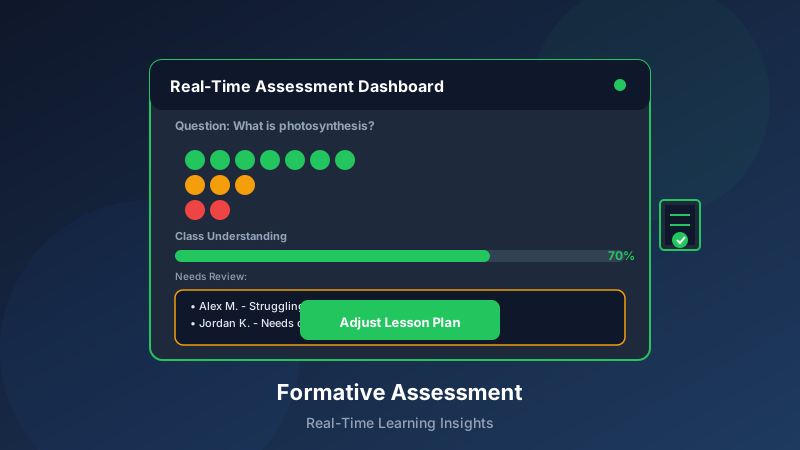
Immediate data visualizationAnonymous response optionsEasy data tracking over timeIncreased participationLearning Management System Features
Built-in formative assessment tools:
Quiz attempts with immediate feedbackDiscussion forum participationProgress tracking on modulesTime-on-task monitoringAdaptive Learning Platforms
AI-powered continuous assessment:
Real-time difficulty adjustmentSkill mastery trackingPersonalized practice recommendationsDetailed progress analyticsProviding Effective Feedback
Characteristics of Good Feedback
Make feedback that actually helps:
Specific and Actionable
Points to particular aspects of workExplains what to do differentlyProvides clear next stepsIncludes examples when helpfulTimely
Given while learning is freshAllows time for revisionAddresses issues before they compoundConnects to current learning goalsGrowth-Oriented
Focuses on improvement, not judgmentEmphasizes effort and strategyMaintains high expectationsEncourages persistenceFeedback Strategies
Deliver feedback effectively:
Written Feedback
Use sticky notes for key pointsHighlight sections with codes (? for unclear, + for strong)Audio/video feedback for complex commentsRubric-based with narrative additionsVerbal Feedback
Conference individually when possibleUse questioning to guide self-correctionProvide specific praise and suggestionsFollow up on previous feedbackWhole-Class Feedback
Address common patterns efficientlyModel error correctionCelebrate strong examplesReteach when neededActing on Assessment Information
Adjusting Instruction in Real-Time
Respond to what assessment reveals:
When Many Students Struggle:
Pause and reteach the conceptTry a different explanation or exampleBreak into smaller stepsProvide additional practiceWhen Most Students Succeed:
Move forward with confidenceProvide extension for quick learnersUse peer tutoring strategicallyDeepen understanding with applicationWhen Results Are Mixed:
Form flexible groups by needDifferentiate next activitiesProvide choice in practice optionsUse strategic pairingData-Informed Planning
Use assessment data for future instruction:
Track patterns across assessmentsIdentify prerequisite gapsAdjust pacing based on evidencePlan targeted interventionsBuilding a Formative Assessment Culture
Classroom Environment
Create safety for learning from mistakes:
Celebrate errors as learning opportunitiesModel your own learning processPraise effort and improvementRemove fear of wrong answersStudent Mindset
Help students embrace formative assessment:
Explain the purpose and benefitsInvolve students in creating criteriaShare how you use their responsesConnect to their goalsSystematic Implementation
Make formative assessment routine:
Build check-points into every lessonUse consistent protocols students knowBalance informal and formal approachesTrack data for continuous improvementCommon Challenges and Solutions
Challenge: Time Constraints
Solutions:
Use efficient digital toolsBuild assessment into activitiesFocus on key learning goalsLeverage peer assessmentChallenge: Large Class Sizes
Solutions:
Technology for aggregating responsesSampling strategiesGroup-based assessmentStrategic observation focusChallenge: Getting Honest Responses
Solutions:
Create psychologically safe environmentUse anonymous options when appropriateSeparate assessment from gradesValue and act on student inputConclusion
Formative assessment transforms teaching from guesswork into responsive, student-centered instruction. When we know where students are in their learning, we can meet them there and guide them forward effectively. Modern assessment platforms make it easier to gather and analyze this data at scale, and a good LMS can embed formative checks directly into the learning experience. The strategies outlined here—from simple exit tickets to sophisticated digital tools—all share a common purpose: gathering evidence to improve learning in real-time.
The most powerful formative assessment happens when it becomes seamlessly integrated into instruction—not as an interruption to teaching, but as the very essence of good teaching. Start with one or two strategies, refine your practice, and gradually build a comprehensive approach that keeps learning visible and actionable every day.