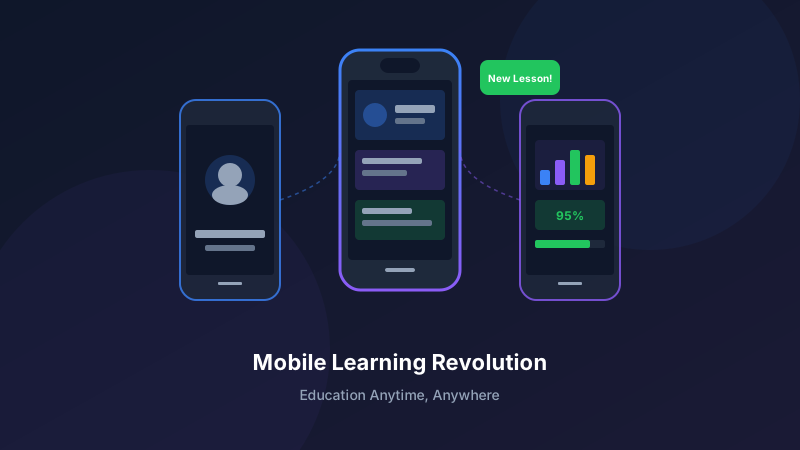
The Mobile Learning Revolution: Education Anytime, Anywhere
Mobile devices have become ubiquitous, and education is following suit. The mobile learning revolution is changing how, when, and where students learn. For education businesses, having a branded mobile app is now a key differentiator--it signals professionalism, improves accessibility, and creates a direct line of communication with students and parents.
The Rise of Mobile Learning
By the Numbers
96% of Americans own a smartphone, and the figure is similarly high across most developed markets85% of students use mobile devices for learning, whether accessing course materials, watching instructional videos, or completing assignmentsThe mobile learning market is projected to reach $80 billion by 2027, driven by demand for flexible, on-the-go education70% of learners prefer mobile over desktop for quick study sessions, review activities, and practice exercisesThese numbers tell a clear story: if your education business does not have a strong mobile presence, you are missing the platform where your students already spend their time.
Why Mobile Matters
Accessibility: Learning happens anywhere--on the bus, during lunch, at home, or while waiting for a sibling's class to finish. Mobile removes the barrier of needing to be in a specific location at a specific time.
Flexibility: Students learn at their own pace and schedule. A student who struggles with a concept can revisit a lesson at midnight. A student who masters material quickly can move ahead without waiting for the next class session.
Engagement: Interactive apps and gamification increase motivation. Push notifications create gentle nudges that keep students connected to their learning goals even between sessions.
Convenience: All learning materials, schedules, grades, and communications live in one pocket-sized device. Parents can check their child's progress, pay tuition, and message instructors without sitting down at a computer.
Essential Features for Mobile Learning Apps
1. Offline Access
Students need to learn even without internet--on planes, in rural areas, or during connectivity outages:
Downloadable content for offline use so students can continue learning without interruptionAutomatic syncing when connection returns, ensuring that progress is never lostProgress tracking that works offline and updates the central student information system when connectivity is restoredReduced data usage options for students on limited mobile data plans2. Responsive Design
Content must work on any screen size, from a small smartphone to a large tablet:
Auto-adjusting layouts that reformat content for the device being usedTouch-optimized interfaces with buttons and navigation elements sized for finger interactionReadable text without zooming, with font sizes that adapt to screen dimensionsEasy navigation on small screens using intuitive menus, swipe gestures, and clear visual hierarchy3. Push Notifications
Keep students engaged with timely reminders that appear even when the app is not open:
Class reminders and deadline alerts that reduce no-shows and late submissionsNew content alerts that encourage students to explore fresh material as soon as it is availableAchievement celebrations that recognize milestones like completing a module or earning a badgePersonalized study prompts based on the student's progress and upcoming assessments4. Progress Tracking
Students and parents want visibility into learning outcomes, and mobile makes it easy to check in frequently:
Visual progress dashboards that show completion percentages, skill mastery, and time spent learningCompletion badges and streaks that reward consistency and build healthy study habitsPerformance analytics that highlight strengths and areas for improvementGoal setting and tracking tools that help students take ownership of their learning journeyMobile Learning Strategies
Microlearning
Break content into small, digestible chunks that fit naturally into a mobile experience:
3 to 5 minute learning modules that cover a single concept or skillSingle concept per session to reduce cognitive load and improve retentionQuick knowledge checks at the end of each module to reinforce understandingEasy to complete on the go, whether a student has two minutes or twentyMicrolearning is especially effective for review and practice. After an in-person or virtual class, students can use micro-modules on their phone to reinforce what they learned.
Gamification
Make learning engaging and fun with proven gamification techniques that boost student motivation:
Points and leaderboards that introduce friendly competition among peersAchievement badges that recognize specific accomplishments and milestonesLevel progression that gives students a sense of advancement and masteryChallenges and competitions that align with curriculum goals while making learning feel like playSocial Learning
Connect learners with each other to build community and accountability:
Discussion forums where students can ask questions, share insights, and help their peersPeer messaging for study groups and collaborative projectsGroup projects that require coordination through the appCommunity features that make students feel part of something larger than their individual learning pathImplementation Considerations
Device Management
Decide between BYOD (bring your own device) and school-provided devices based on your student demographics and program modelEstablish clear security and privacy policies that protect student data on mobile devicesPlan for app management and updates, ensuring students always have the latest versionProvide technical support resources including FAQ pages, video tutorials, and a help desk contactContent Adaptation
Not all existing content translates well to mobile. Successful mobile learning requires intentional design:
Convert existing content for mobile by breaking long lessons into shorter segments and optimizing media for smaller screensCreate mobile-first new content that is designed for touch interaction and small-screen consumption from the startTest on various devices including both iOS and Android phones and tablets at different screen sizesGather user feedback from students and parents to identify usability issues and content gapsParent Engagement
Mobile apps can drive parent engagement and portal adoption more effectively than any other channel:
Parent portal access through the same app makes it easy for families to stay informedProgress notifications delivered via push alert keep parents in the loop without requiring them to log inCommunication features including messaging and announcement feeds create a direct connection between families and instructorsScreen time considerations should be addressed with features like daily usage summaries and the ability to set learning time goalsMeasuring Mobile Learning Success
Key metrics to track when evaluating the effectiveness of your mobile learning program:
App adoption rates: What percentage of your students and parents have downloaded and actively use the app?Session frequency and duration: How often do students open the app, and how long do they spend learning each session?Content completion rates: Are students finishing the modules and activities assigned to them?Student achievement outcomes: Are mobile learners performing at or above the level of students who learn through other channels?Parent engagement levels: Are parents logging in to check progress, communicate with instructors, and stay involved?Track these metrics monthly and use the insights to refine your content, adjust your notification strategy, and improve the overall mobile experience.
Conclusion
Mobile learning is not just a trend--it is the future of education. Institutions that embrace mobile technology will provide more accessible, engaging, and effective learning experiences for their students. Explore virtual classroom features that transform online learning, or learn how the benefits of white-labeling an education platform can give your mobile experience a professional, branded feel.