The Rise of Micro-Credentials in Professional Education
The traditional model of education—front-loaded degrees followed by decades of work—is giving way to a new paradigm of continuous learning. At the center of this shift is the micro-credential: a focused, verified attestation of specific skills or knowledge. Here's how this trend is reshaping professional education and what it means for learning providers.
Understanding Micro-Credentials
What Are Micro-Credentials?
Micro-credentials are certification of assessed learning that is:
Focused
Specific skill or competencyNarrow scope rather than broad curriculumClear learning outcomesPractical application orientationVerified
Assessment of actual competenceThird-party or institutional validationRigorous evaluation standardsFraud-resistant credentialingStackable
Combinable into larger credentialsBuilding blocks toward degrees or certificatesProgressive skill development pathsPortfolio-based accumulationPortable
Shareable across platformsDigital format for easy verificationPersistent across career transitionsEmployer-readable and verifiableForms of Micro-Credentials
The micro-credential ecosystem includes various formats:
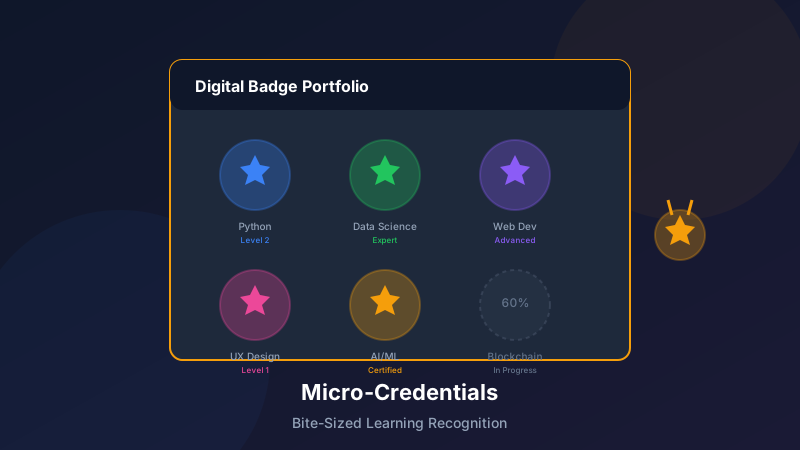
Digital Badges
Visual representation of achievementMetadata embedded with verification informationShareable on social platforms and portfoliosIssuer and assessment details includedIndustry Certifications
Vendor-specific credentials (Microsoft, AWS, Cisco)Industry association certificationsProfessional license componentsCompetency demonstrationsCourse Certificates
Completion credentials from MOOCs and online learningUniversity continuing education certificatesProfessional development attestationsTraining program completionsSkill Assessments
Verified skill level demonstrationsStandardized assessment platformsEmployer-recognized benchmarksTechnical and soft skill evaluationMarket Dynamics
Why Micro-Credentials Are Growing
Several forces drive the trend:
Pace of Change
Skills become obsolete faster than everContinuous upskilling requiredDegree half-life decliningJust-in-time learning needsCost and Time Considerations
Traditional degrees expensive and lengthyROI of full programs unclear for mid-careerTargeted learning more efficientLower risk for skill explorationEmployer Needs
Specific skills required, not general educationRapid hiring needs don't allow for degree attainmentEvidence of current competency valuedSkill matching for project-based workLearner Preferences
Flexibility in timing and pacingRelevance to immediate needsVisible progress and achievementPortfolio-building orientationMarket Size and Growth
The numbers are compelling:
Global micro-credential market projected at $7 billion by 202750%+ annual growth in some segmentsMajor employers actively hiring based on credentialsUniversities creating or acquiring micro-credential offeringsKey Players
The ecosystem includes diverse providers:
Universities
Traditional institutions offering micro-credentialsOnline program providersContinuing education divisionsCorporate partnership programsCorporate Training Providers
Vendors offering product certificationsProfessional training companiesCorporate learning platformsIndustry association credentialingEdTech Platforms
MOOCs (Coursera, edX, Udacity)Skill platforms (LinkedIn Learning, Pluralsight)Bootcamps and intensive programsSpecialized skill providersAssessment Providers
Skill testing platformsCompetency verification servicesIndustry benchmark assessmentsCredential verification servicesImplications for Learning Providers
Opportunities
Micro-credentials create possibilities:
New Revenue Streams
Shorter-cycle products with higher per-hour pricingSubscription and bundle modelsCorporate training partnershipsAssessment and verification servicesBroader Audience Reach
Working professionals without degree timeCareer changers seeking specific skillsEmployers investing in workforce developmentGeographic reach through online deliveryAgility in Offerings
Faster program development cyclesRapid response to emerging skill needsLower-risk program experimentationMarket-responsive curriculumChallenges
The shift also presents obstacles:
Quality Assurance
Maintaining rigor in short formatsAssessment integrity concernsConsistency across offeringsAccreditation and recognition questionsMarket Crowding
Many competitors in popular skill areasDifferentiation challengesPrice competitionDiscovery and marketing costsCredential Fatigue
Too many micro-credentials confuse employersRecognition and acceptance questionsValue proposition clarity neededStackability complexityCannibalization Concerns
Micro-credentials potentially replacing traditional offeringsRevenue model disruptionFaculty role evolutionInstitutional identity questionsBuilding a Micro-Credential Program
Design Principles
Creating effective micro-credentials:
Labor Market Alignment
Start with skill demand analysisEmployer input on competency definitionsCurrent technology and practice focusCareer pathway relevanceAssessment Rigor
Clear competency standardsAuthentic assessment tasksAppropriate assessment securityMultiple assessment modalitiesLearning Design Quality
Focused, efficient contentActive learning orientationPractical application emphasisFeedback and iterationCredential Clarity
Clear statement of what earner can doTransparent assessment requirementsVisible alignment to standardsEasy verification for reviewersDevelopment Process
Steps to launch micro-credentials:
1. Market Research
Identify in-demand skillsAssess competitive landscapeDetermine target audienceEvaluate price sensitivity2. Competency Definition
Define specific, measurable outcomesAlign with industry frameworksVerify employer recognitionEnsure appropriate scope3. Assessment Design
Develop valid, reliable assessmentsCreate authentic tasksEstablish passing criteriaBuild assessment security4. Learning Experience Design
Create efficient contentIncorporate practice opportunitiesBuild toward assessmentProvide feedback mechanisms5. Credentialing Infrastructure
Select badging platformEstablish verification processesCreate shareable credential formatBuild verification pathwayTechnology Considerations
Platforms and tools for micro-credentials:
Credentialing Platforms
Digital badge issuers (Credly, Badgr)Credential management systemsVerification infrastructureIntegration with learning systemsLearning Platforms
Micro-learning delivery toolsAssessment and proctoring systemsPortfolio and evidence collectionMobile and flexible accessIntegration Requirements
Learning management system connectionCredential wallet integrationSocial platform sharingEmployer verification APIsThe Employer Perspective
How Employers Are Using Micro-Credentials
Employers integrate micro-credentials into talent practices:
Hiring
Skill-based job requirementsCredential verification in screeningAlternative to degree requirementsEvidence of current competencyInternal Development
Upskilling program incentivesSkill gap closure trackingCareer pathway visualizationLearning recognitionTalent Marketplace
Internal skill matchingProject staffingSuccession planningWorkforce capability mappingWhat Employers Want
Key characteristics that matter:
Verifiability
Easy confirmation of authenticityClear issuer reputationAssessment transparencyFraud preventionCurrency
Recency of completionRelevance to current practicesExpiration or renewal requirementsEvidence of ongoing learningRelevance
Specific skill alignment to needsAppropriate level and depthPractical application evidenceIndustry recognitionLearner Considerations
Navigating the Micro-Credential Landscape
Guidance for earners:
Choosing Wisely
Research employer recognitionVerify issuer reputationConfirm assessment rigorConsider stackabilityBuilding a Portfolio
Strategic selection for career goalsCoherent skill narrativeBalance of breadth and depthRegular updating and maintenanceShowcasing Credentials
Optimal LinkedIn integrationResume presentationInterview evidenceVerification pathwayThe Future of Micro-Credentials
Emerging Trends
What's coming next:
Blockchain Credentialing
Immutable verification recordsSelf-sovereign credential ownershipCross-platform portabilityDecentralized verificationSkills-Based Hiring Expansion
More employers moving beyond degreesCredential-based screening toolsSkills marketplace platformsDynamic skill requirementsAI-Powered Assessment
Automated competency evaluationNatural language assessmentSimulation-based testingContinuous skill measurementCredential Interoperability
Standard frameworks for translationCross-issuer recognitionInternational portabilityPathway transparencyStrategic Implications
For learning providers considering micro-credentials:
Act Now
Market moving quicklyFirst-mover advantages in recognitionEmployer relationship building takes timeLearning curve for effective designBuild Quality
Differentiate on rigorInvest in assessment designPrioritize employer recognitionMaintain brand integrityThink Systemically
Micro-credentials as entry pointStackability toward larger credentialsRelationship building with learnersCareer-long engagement modelConclusion
Micro-credentials represent both an opportunity and an imperative for learning providers. The shift toward skills-based hiring, continuous learning, and just-in-time development creates demand that micro-credentials can serve. For organizations willing to invest in quality design, rigorous assessment, and employer engagement, micro-credentials can become a significant growth avenue.
The key is balancing accessibility and efficiency with the rigor that gives credentials meaning. A micro-credential worth nothing in the job market helps no one. But a well-designed, well-recognized micro-credential can open doors for learners, provide talent solutions for employers, and generate sustainable revenue for providers.
The micro-credential future is arriving now. The question for learning providers—from test prep centers to online tutoring platforms—is whether they will help shape it or be shaped by it.