Scaffolding Techniques for Complex Skill Development
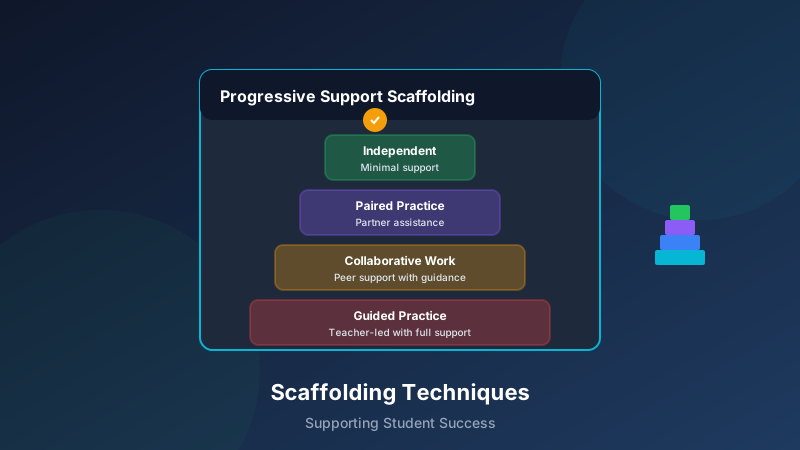
Instructional scaffolding provides temporary, adjustable support that helps students master complex skills they couldn't achieve independently. Like construction scaffolding that's removed once a building can stand alone, educational scaffolding is systematically withdrawn as learners develop competence.
Understanding Instructional Scaffolding
What Is Scaffolding?
Scaffolding represents structured support for learning:
Core Principles
Temporary assistance that fades over timeSupport at the edge of current abilityActive learner participation throughoutResponsive adjustment based on progressGoal of independent performanceZone of Proximal Development
Vygotsky's theory of learning potentialGap between independent and supported abilityWhere scaffolding is most effectiveExpanding capabilities through assistanceBuilding toward independenceWhy Scaffolding Matters
Benefits for student learning:
Skill Development
Master complex tasks incrementallyBuild confidence through successDevelop metacognitive awarenessTransfer skills to new contextsAchieve higher-level outcomesEngagement Enhancement
Reduce frustration with difficultyMaintain optimal challenge levelIncrease motivation to persistCreate sense of accomplishmentSupport growth mindset developmentEquity Promotion
Support diverse learning needsProvide access to rigorous contentBridge background knowledge gapsEnable all students to succeedDifferentiate without limitingTypes of Scaffolding
Procedural Scaffolding
Supporting how to complete tasks:
Task Breakdown
Divide complex tasks into stepsSequence activities logicallyIdentify prerequisite skillsCreate completion checklistsMark progress milestonesGraphic Organizers
Provide visual frameworksStructure thinking processesOrganize information clearlyGuide written responsesSupport planning and reflectionProcess Guides
Step-by-step instructionsDecision trees for complex choicesFlowcharts for proceduresReference cards for processesAnnotated examplesConceptual Scaffolding
Supporting understanding of ideas:
Advance Organizers
Preview key conceptsActivate prior knowledgeEstablish mental frameworksConnect to familiar ideasSet learning expectationsAnalogies and Metaphors
Link new to known conceptsMake abstract concreteBuild mental modelsCreate memorable connectionsSupport transferVisual Representations
Diagrams and illustrationsConcept maps and websModels and simulationsVideos and animationsReal-world examplesStrategic Scaffolding
Supporting approach selection:
Metacognitive Prompts
Self-questioning strategiesReflection opportunitiesProgress monitoring cuesStrategy selection guidanceError analysis supportThink-Alouds
Expert modeling of thinkingMaking invisible visibleDemonstrating problem-solvingShowing strategy useNormalizing challengesStrategy Instruction
Explicit strategy teachingWhen and why to use strategiesPractice with feedbackStrategy repertoire buildingFlexible application guidanceScaffolding Strategies by Skill Type
Reading Comprehension
Building understanding of texts:
Before Reading
Vocabulary pre-teachingBackground knowledge activationPurpose settingPrediction promptingText structure previewDuring Reading
Annotation guidanceChunked reading assignmentsCheck-for-understanding stopsThink-aloud modelingGraphic organizer completionAfter Reading
Summary frameworksDiscussion protocolsWritten response scaffoldsConnection promptsExtension activitiesWriting Development
Supporting written expression:
Planning Phase
Brainstorming templatesOutline structuresResearch organization toolsThesis development guidesAudience analysis frameworksDrafting Phase
Paragraph templatesSentence startersTransition word banksExample passagesSection-by-section guidesRevision Phase
Self-editing checklistsPeer review protocolsRubric-guided revisionTeacher conference guidesSpecific feedback focusMathematical Problem-Solving
Developing mathematical thinking:
Problem Understanding
Problem analysis protocolsGiven/find/solve frameworksVisualization strategiesEstimation expectationsConnection to prior problemsStrategy Development
Strategy menu optionsWorked example analysisMultiple solution pathsError analysis practiceThink-aloud demonstrationsSolution Communication
Explanation templatesMathematical vocabulary supportJustification frameworksPresentation structuresSelf-assessment guidesScientific Inquiry
Building investigation skills:
Question Development
Question stem framesTestable question criteriaVariable identification guidesHypothesis writing templatesResearch question refinementInvestigation Design
Experiment planning templatesMaterials and methods guidesData collection frameworksSafety consideration checklistsControl and variable supportAnalysis and Conclusion
Data organization toolsPattern identification guidesConclusion writing framesEvidence-reasoning connectionsLimitation acknowledgmentImplementing Effective Scaffolding
Gradual Release Model
Systematic responsibility transfer:
I Do (Modeling)
Teacher demonstrates fullyThinking made explicitStudents observe and listenQuestions for clarificationHigh support, low independenceWe Do (Guided Practice)
Teacher and students togetherCollaborative problem-solvingScaffolds actively usedImmediate feedback providedModerate support and independenceYou Do Together (Collaborative)
Student pairs or groupsTeacher monitoring and supportPeer scaffolding encouragedReduced direct assistanceGrowing independenceYou Do Alone (Independent)
Individual student workMinimal scaffolding neededSelf-monitoring emphasizedSupport available if neededHigh independence demonstratedResponsive Scaffolding
Adjusting support based on needs:
Assessment of Need
Observe struggle indicatorsCheck understanding frequentlyAnalyze error patternsListen to student thinkingAsk probing questionsSupport Calibration
Match scaffolding to gapAvoid over-scaffoldingChallenge appropriatelyAdjust in real-timeDifferentiate by studentFading Decisions
Look for competence signsReduce support graduallyTest independence regularlyReintroduce if neededCelebrate milestone progressCommon Pitfalls
Avoiding scaffolding mistakes:
Over-Scaffolding
Too much support limits growthCreates dependency on assistanceRemoves productive struggleMay bore advanced studentsLimits skill developmentUnder-Scaffolding
Frustration and failureNegative learning associationsSkill gaps accumulateMotivation decreasesInequity increasesStatic Scaffolding
Same support for everyoneNo adjustment over timeIgnoring progress indicatorsOne-size-fits-all approachMissing individual needsTechnology-Enhanced Scaffolding
Digital Scaffolding Tools
Technology-based support:
Adaptive Platforms
Automatic difficulty adjustment via a learning management systemPersonalized hint systemsProgress-based scaffoldingReal-time feedbackData-driven supportMultimedia Resources
Video explanations on demandInteractive tutorialsAudio supports for readingVisual representationsVirtual manipulativesCollaboration Tools
Discussion platformsShared document scaffoldsPeer feedback systemsExpert access opportunitiesCommunity supportEffective Technology Integration
Making digital scaffolding work:
Selection Criteria
Aligns with learning goalsProvides appropriate challengeOffers adjustable supportTracks student progressIntegrates with instructionImplementation Strategies
Introduce tools purposefullyModel effective useMonitor engagementSupplement with human supportEvaluate effectivenessMeasuring Scaffolding Effectiveness
Success Indicators
Knowing scaffolding works:
Student Progress
Skill development over timeDecreasing support needsIncreasing independenceTransfer to new contextsConfidence growthEngagement Signs
Productive struggle maintainedPersistence with challengesActive participationWillingness to take risksPositive learning dispositionAdjustment Triggers
When to modify approach:
Too Much Support
Quick task completion without challengeLack of student thinking visibleWaiting for teacher directionLimited growth observedBoredom indicatorsToo Little Support
Excessive frustrationTask avoidanceRepeated failureDisengagementDeclining confidenceConclusion
Effective scaffolding transforms complex skill development from overwhelming to achievable. By providing structured, responsive, and gradually fading support, educators enable all students to reach higher levels of competence while developing the independence and metacognitive skills needed for lifelong learning.
The art of scaffolding lies in finding the right balance—enough support to enable success, but not so much that it prevents the productive struggle essential for deep learning. Platforms with robust assessment tools can help educators identify exactly where each student needs support. With thoughtful planning, responsive implementation, and systematic fading, scaffolding becomes a powerful tool for developing complex skills in every learner.