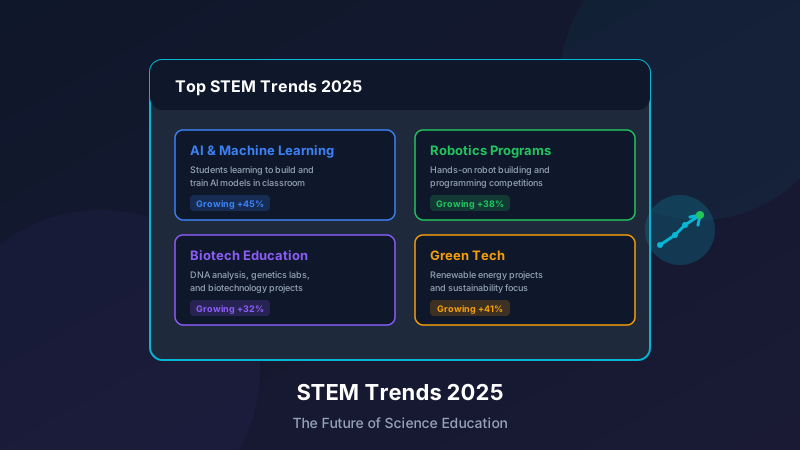
STEM Education Trends: What Learning Centers Need to Know for 2025
STEM education continues to evolve rapidly, driven by technological advances and changing workforce needs. As we look toward 2025, learning centers that stay ahead of these trends will be best positioned to serve students and families. Here are the key STEM trends shaping the education landscape.
The State of STEM Education
Growing Demand
The appetite for STEM education has never been stronger:
80% of jobs will require STEM skills within the next decadeParents increasingly prioritize STEM enrichment for childrenSTEM occupations are projected to grow 10.5% through 2030Starting salaries for STEM careers significantly outpace other fieldsEvolving Definition
STEM itself is expanding:
STEAM: Adding Arts for creativity and design thinkingSTREAM: Including Reading for literacy across disciplinesComputer Science: Now considered a foundational STEM pillarData Literacy: Emerging as an essential skill setTop STEM Trends for 2025
1. AI and Machine Learning Education
Artificial intelligence is no longer optional:
What's Changing:
AI concepts being introduced at younger agesHands-on AI projects accessible to elementary studentsFocus on AI ethics and responsible developmentIntegration of AI tools into STEM instructionHow to Prepare:
Partner with AI education platformsTrain instructors on AI fundamentalsDevelop age-appropriate AI curriculumCreate projects that demystify machine learning2. Computational Thinking Across Subjects
Coding is just the beginning:
What's Changing:
Emphasis on problem decomposition and algorithmsComputational thinking applied to non-CS subjectsPattern recognition as a core skillDebugging mindset for all learningHow to Prepare:
Integrate computational thinking across all programsUse unplugged activities for younger studentsConnect coding to real-world problem solvingTrain staff in computational thinking pedagogy3. Maker Spaces and Physical Computing
Hands-on learning is back:
What's Changing:
Resurgence of physical building and prototypingIntegration of electronics and programming (Arduino, Raspberry Pi)Focus on sustainable materials and environmental design3D printing becoming standard in educationHow to Prepare:
Invest in maker space equipmentDevelop project-based curriculaCreate spaces for exploration and failureConnect digital and physical learning4. Data Science for Young Learners
Data literacy starts early:
What's Changing:
Data collection and analysis at elementary levelsVisualization tools designed for childrenEthical data use discussionsReal-world data projectsHow to Prepare:
Incorporate data activities into existing programsUse accessible data visualization toolsConnect data to student interests (sports stats, games)Build critical thinking about data claims5. Environmental STEM
Sustainability drives innovation:
What's Changing:
Climate science integration across STEMGreen engineering challengesCitizen science participationRenewable energy projectsHow to Prepare:
Add environmental projects to curriculumPartner with local environmental organizationsCreate outdoor learning opportunitiesFocus on solutions-oriented thinking6. Virtual and Augmented Reality
Immersive STEM experiences:
What's Changing:
VR labs for dangerous or expensive experimentsAR overlays for enhanced learningVirtual field trips to inaccessible locationsImmersive simulations for complex conceptsHow to Prepare:
Evaluate VR/AR platforms for educationStart with smartphone-based AR experiencesIntegrate virtual labs strategicallyBalance virtual with hands-on experiencesImplementing STEM Trends in Your Center
Assessment and Planning
Before jumping in:
Audit Current Offerings: What STEM programs do you offer now?Assess Student Interest: What do families want?Evaluate Resources: What can you realistically implement?Identify Gaps: Where are opportunities for differentiation?Phased Implementation
Roll out new programs strategically:
Phase 1: Foundation
Select one or two trends to focus onTrain core staffPilot with interested familiesGather feedback and iteratePhase 2: Expansion
Broaden successful programsAdd complementary offeringsIncrease staff trainingMarket new capabilitiesPhase 3: Integration
Connect STEM trends across programsDevelop signature experiencesBuild community partnershipsEstablish as STEM leaderStaff Development
Invest in your team:
Provide ongoing professional developmentEncourage experimentation and innovationCreate communities of practiceRecognize STEM leadershipCurriculum Design Principles
Project-Based Learning
Students learn by doing:
Frame learning around authentic problemsAllow student choice within structureEmphasize process over productCelebrate failure as learningCross-Disciplinary Connections
STEM doesn't exist in silos:
Connect math to engineering projectsIntegrate writing with science investigationsUse art to communicate scientific findingsApply history to understand technology developmentReal-World Relevance
Students need to see the "why":
Invite STEM professionals to share careersConnect projects to community needsUse current events and newsHighlight diverse STEM role modelsMeasuring STEM Success
Beyond Test Scores
Capture the full picture:
Student confidence and interest in STEMProblem-solving approach and persistenceCollaboration and communication skillsCreative and innovative thinkingApplication to new situationsPortfolio Assessment
Show what students can do:
Document projects and processInclude student reflectionsDemonstrate growth over timeShare with familiesMarketing Your STEM Programs
Differentiation
Stand out in a crowded market:
Highlight unique equipment and facilitiesShowcase instructor expertiseShare student success storiesEmphasize hands-on, project-based approachCommunity Engagement
Build local STEM reputation:
Host STEM nights for familiesPartner with schools for outreachParticipate in STEM fairs and competitionsConnect with local STEM employersConclusion
The STEM/STEAM landscape continues to evolve, creating both challenges and opportunities for learning centers. By staying informed about trends, investing in staff development, and implementing programs thoughtfully, you can position your center as a STEM leader in your community. The learning centers that thrive in 2025 will be those that embrace innovation while staying focused on what matters most—student learning and success.