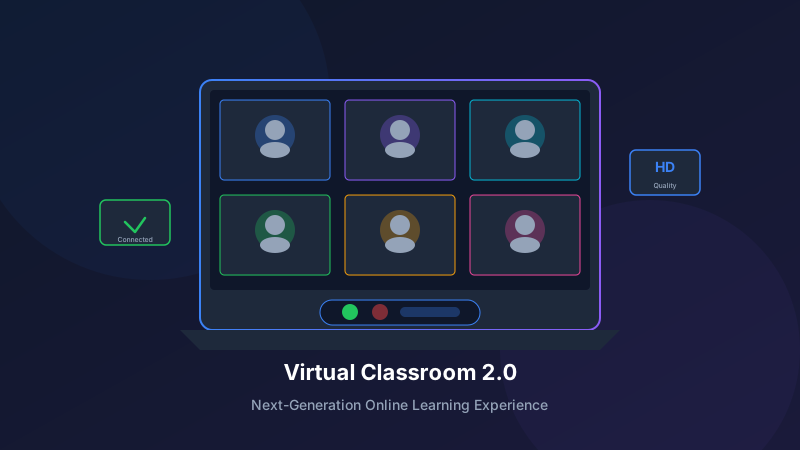
Virtual Classroom 2.0: Features That Transform Online Learning
The virtual classroom has evolved far beyond basic video conferencing. Today's leading online class platforms offer immersive, interactive experiences that rival--and sometimes exceed--traditional classroom environments. For learning centers, tutoring businesses, and education franchises, adopting next-generation virtual classroom technology is no longer optional. It is a competitive necessity that directly impacts student outcomes, parent satisfaction, and enrollment growth.
The Evolution of Virtual Learning
From Basic Video Calls to Immersive Experiences
The first generation of virtual classrooms were essentially video calls with screen sharing. While functional, they lacked the engagement and interactivity of in-person learning. Students passively watched a screen, instructors struggled to gauge understanding, and parents questioned whether online learning could truly deliver results.
Virtual Classroom 2.0 changes everything by bringing the best aspects of in-person instruction into the digital environment:
HD Video Quality: Crystal-clear video that captures facial expressions and body language, helping instructors read the room and respond to student cuesInteractive Whiteboards: Real-time collaboration with multiple participants, supporting everything from math problem-solving to group brainstorming sessionsBreakout Rooms: Small group discussions and activities that give every student a chance to participate activelyLive Polling and Quizzes: Instant engagement and assessment that keeps students on their toes and provides instructors with real-time feedback on comprehensionScreen Annotation: Mark up shared content in real-time, allowing instructors to highlight key concepts and students to follow along visuallyKey Features of Modern Virtual Classrooms
1. AI-Powered Engagement Tools
Artificial intelligence is revolutionizing virtual learning by giving instructors insights that would be impossible to gather manually:
Automatic attendance tracking with facial recognition eliminates manual roll calls and provides accurate recordsEngagement scoring based on participation patterns helps instructors identify students who are drifting off or struggling to keep upSmart content recommendations based on learning progress ensure that students receive the right material at the right timeReal-time translation for multilingual classrooms removes language barriers and opens your programs to a global audienceThese AI capabilities transform the instructor's role from content deliverer to learning facilitator, enabling more personalized and effective instruction.
2. Interactive Whiteboards
Modern whiteboards go beyond simple drawing to become full collaboration environments:
Import PDFs, images, and documents directly onto the board for annotation and discussionMathematical equation support that renders formulas correctly, essential for STEM instruction3D object manipulation for science and engineering concepts that benefit from spatial visualizationCollaborative mind mapping where multiple students contribute ideas simultaneouslySave and share board content so students can review session materials at their own pace through the LMS3. Assessment Integration
Seamless assessment tools within the virtual classroom eliminate the gap between instruction and evaluation:
Pop quizzes with instant grading provide immediate feedback loops that reinforce learningAssignment submission during class allows instructors to review and discuss work in real timeProgress tracking visible to students and instructors creates accountability and motivationGamified learning elements like points, badges, and leaderboards make assessments feel less like tests and more like challenges4. Recording and Playback
Never miss a moment of learning, and give students the ability to revisit material whenever they need to:
Automatic cloud recording captures every session without requiring the instructor to remember to press recordChaptered playback for easy navigation lets students jump directly to the section they need to reviewTranscription and closed captioning make content accessible to students with hearing impairments and those who prefer readingSearchable content within recordings allows students to find specific topics by keyword5. Parent Visibility
Modern virtual classrooms extend transparency to parents, building trust and engagement:
Session summaries automatically shared with parents after each classProgress dashboards accessible through a branded mobile app so parents can check in anytimeRecording access so parents can see exactly what their child is learningImplementation Best Practices
Technical Setup
Ensure reliable internet with a minimum of 10 Mbps for smooth video and screen sharingUse quality webcams and microphones--audio quality matters even more than video in virtual learningEstablish backup communication channels in case of technical issues during a sessionTest equipment before each session and provide students with a pre-session technical checklistEngagement Strategies
Start with ice-breakers and check-ins to build rapport and set the tone for active participationUse polls every 10 to 15 minutes to maintain attention and check understandingIncorporate breakout activities that require students to collaborate, discuss, and present findingsEnd with reflection and Q&A to consolidate learning and give students a voiceStudent Support
Provide technical orientation sessions for new students before their first class so they are comfortable with the platformCreate troubleshooting guides with screenshots and step-by-step instructions for common issuesOffer multiple ways to participate including chat, voice, reactions, and whiteboard contributions so every learning style is accommodatedBuild in flexibility for connection issues by recording sessions and making materials available asynchronouslyMeasuring Success
Track these metrics to evaluate your virtual classroom and identify areas for improvement:
Student engagement scores based on participation frequency, poll responses, and interaction dataAssignment completion rates to gauge whether students are following through on learning activitiesAttendance and participation levels compared against in-person benchmarksStudent satisfaction surveys collected after each term to capture qualitative feedbackLearning outcome assessments that measure whether virtual instruction is achieving the same results as in-person deliveryConclusion
Virtual Classroom 2.0 represents a fundamental shift in how we think about online learning. With the right platform and strategies, virtual education can be just as effective--and sometimes more so--than traditional classroom instruction. For a step-by-step look at implementing these tools, read our case study on launching online tutoring services or learn how to start an online tutoring business.