Preparing Students for Jobs That Don't Exist Yet
The World Economic Forum estimates that 65% of children entering primary school today will work in jobs that don't yet exist. How do we prepare students for careers we can't even imagine? The answer lies not in predicting specific future jobs, but in developing transferable skills and mindsets that will serve students regardless of how the world changes.
The Changing Nature of Work
Historical Perspective
Job evolution is accelerating:
Agricultural economy → Industrial economy: 100+ yearsIndustrial economy → Service economy: 50+ yearsService economy → Knowledge economy: 25+ yearsKnowledge economy → AI-augmented economy: Happening nowCurrent Disruptions
Forces reshaping the job market:
Artificial Intelligence
Automation of routine cognitive tasksAugmentation of complex decision-makingCreation of new human-AI collaboration rolesDisplacement requiring reskillingGlobal Connectivity
Remote work normalizationGlobal talent competitionCross-cultural collaboration requirements24/7 business operationsSustainability Imperative
Green economy job creationTraditional industry transformationNew regulatory and compliance rolesCircular economy opportunitiesDemographic Shifts
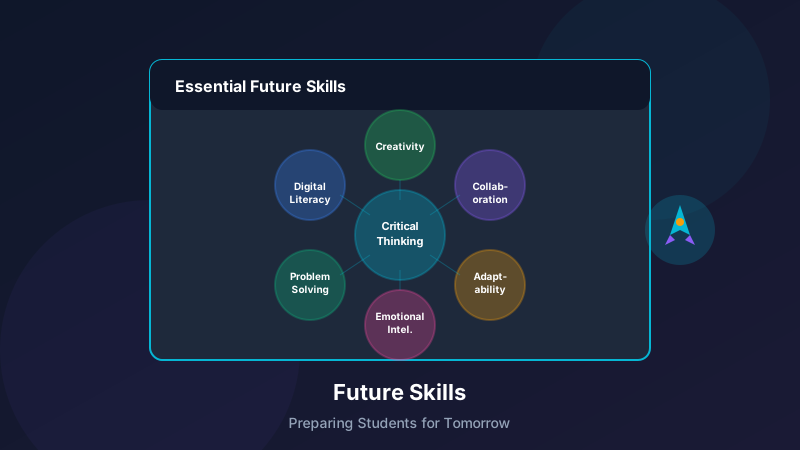
Aging populations in developed nationsLongevity requiring longer careersGenerational diversity in workplacesChanging retirement patternsFuture-Ready Skills Framework
1. Cognitive Skills
Thinking abilities that transcend specific content:
Critical Thinking
Evaluating information for reliability and biasAnalyzing complex problems from multiple anglesMaking decisions with incomplete informationQuestioning assumptions and conventional wisdomCreative Problem-Solving
Generating novel solutions to challengesConnecting ideas from different domainsIterating and improving through experimentationEmbracing ambiguity as opportunitySystems Thinking
Understanding interconnections and dependenciesAnticipating second and third-order effectsRecognizing patterns across contextsBalancing short and long-term considerationsMetacognition
Awareness of one's own thinking processesSelf-regulation of learning strategiesAccurate self-assessmentContinuous self-improvement orientation2. Technical Literacy
Foundational technology skills for any future:
Computational Thinking
Breaking problems into manageable componentsRecognizing patterns and abstractionsDeveloping step-by-step solutionsUnderstanding algorithmic logicData Fluency
Reading and interpreting data visualizationsUnderstanding statistical conceptsQuestioning data sources and methodsMaking data-informed decisionsDigital Citizenship
Online safety and privacy managementEthical technology useDigital identity managementInformation verification skillsAI Collaboration
Understanding AI capabilities and limitationsEffective prompting and interactionEvaluating AI outputs criticallyHuman-AI task division awareness3. Social-Emotional Skills
Human capabilities that AI cannot replace:
Emotional Intelligence
Self-awareness and regulationEmpathy and social awarenessRelationship managementMotivation and resilienceCommunication
Clear written and verbal expressionActive listeningCross-cultural communicationPersuasion and influenceCollaboration
Working effectively in diverse teamsConflict resolutionShared leadershipRemote and asynchronous teamworkAdaptability
Comfort with change and uncertaintyRapid learning of new skillsPivoting strategies when neededMaintaining effectiveness under pressure4. Character Qualities
Mindsets that enable continuous growth:
Growth Mindset
Belief in ability to develop skillsEmbrace of challenges as learning opportunitiesPersistence through setbacksInspiration from others' successCuriosity
Intrinsic motivation to learnQuestion-asking orientationExploration of diverse topicsLifelong learning commitmentInitiative
Self-starting on projects and solutionsEntrepreneurial orientationProactive problem identificationOwnership mentalityEthical Grounding
Clear personal valuesIntegrity in decisions and actionsConsideration of societal impactResponsible use of power and influenceCurriculum Implications
Shifting from Content to Competency
The balance of what we teach must evolve:
Traditional Emphasis
Subject-specific knowledgeRight answers and proceduresIndividual achievementTeacher-directed learningFuture-Ready Emphasis
Transferable skillsProcess and problem-solvingCollaborative learningStudent-directed inquiryThe Balance
Content still matters—you can't think critically about nothing. But content becomes a vehicle for skill development rather than the sole purpose.
Project-Based and Problem-Based Learning
Real-world applications develop future skills:
Authentic Problems
Complex challenges without clear solutionsMultiple stakeholder perspectivesConstraints and trade-offsReal-world impact possibilityExtended Inquiry
Time for deep investigationIteration and revisionStudent voice and choicePublic products and presentationsSkill Integration
Multiple disciplines connectedTechnical and social skills combinedContent and process intertwinedAssessment of both product and processTechnology Integration
Preparing for an AI-augmented future:
Computational Learning
Coding as literacy, not specialtyRobotics and automation exposureAI tool explorationDigital creation across mediaAppropriate Use
Technology when it adds valueHuman skills when they're irreplaceableBalance of screen and non-screenTool evaluation and selectionCritical Consumption
Media literacy developmentAI output evaluationInformation verificationDigital well-being attentionSocial-Emotional Development
Making SEL central, not peripheral:
Explicit Instruction
Named and taught skillsVocabulary for emotional intelligencePractice and feedbackAge-appropriate progressionEmbedded Practice
Collaboration in academic workReflection built into routinesReal conflicts as learning opportunitiesDiverse interaction by designCulture Creation
Belonging and inclusionSafety for risk-takingCelebration of growthModeling by adultsPedagogical Approaches
Inquiry-Based Learning
Students as questioners and discoverers:
Open-ended investigationsStudent-generated questionsEvidence-based reasoningReflection and revisionDesign Thinking
Creative problem-solving process:
Empathize: Understand user needsDefine: Clarify the problemIdeate: Generate many solutionsPrototype: Create quick modelsTest: Get feedback and improveEntrepreneurial Learning
Initiative and innovation skills:
Identifying opportunitiesDeveloping and testing ideasManaging resources and riskLearning from failureGlobal and Cultural Learning
Preparing for interconnected world:
Cross-cultural exposureMultiple perspective-takingGlobal issue engagementLanguage and communication diversityAssessment Evolution
Beyond Traditional Testing
Measuring what matters for the future:
Performance Assessment
Complex task demonstrationApplication to new contextsProcess and product evaluationAuthentic audiencesPortfolio Documentation
Evidence of growth over timeStudent reflection and self-assessmentMultiple artifact typesGoal-setting integrationCompetency-Based Progression
Mastery as the variable, not timeClear skill progressionsMultiple ways to demonstratePersonalized pacingSelf-Assessment and Reflection
Building metacognitive capacity:
Regular self-evaluation practiceGoal-setting and monitoringFeedback interpretation skillsGrowth mindset developmentParent and Community Engagement
Communicating the Shift
Helping stakeholders understand:
Why traditional metrics aren't enoughWhat future-ready skills look likeHow curriculum is evolvingTheir role in developmentHome Practices
Reinforcing future skills at home:
Open-ended questions and discussionsProblem-solving in family lifeTechnology balance modelingCuriosity encouragementCommunity Connections
Real-world skill development:
Mentorship programsJob shadowing opportunitiesCommunity service projectsProfessional problem partnershipsThe Educator's Role
Facilitator, Not Just Deliverer
Teaching for the future requires new roles:
Designer of Learning Experiences
Creating engaging challengesCurating resourcesSequencing for skill developmentDifferentiating for learnersCoach and Guide
Supporting student-directed learningAsking questions more than answeringProviding timely feedbackEncouraging persistenceModel Learner
Demonstrating curiosityLearning alongside studentsEmbracing uncertaintyGrowing visiblyContinuous Learning
Educators as future-ready professionals:
Staying current with changeExperimenting with pedagogyCollaborating with colleaguesReflecting on practiceConclusion
We cannot predict the specific jobs our students will hold, but we can develop the skills and mindsets that will enable them to thrive in any future. This requires a fundamental shift from education as content transmission to education as capacity building.
The future-ready student is not one who has memorized the most facts, but one who can learn continuously, solve novel problems, collaborate across differences, and adapt to change. By focusing on transferable skills, embracing new pedagogies, and evolving our assessment practices, we can prepare students not just for jobs that don't exist yet, but for a lifetime of meaningful work and contribution.
The future is uncertain, but our students don't have to be unprepared. STEM/STEAM programs and afterschool enrichment programs that emphasize problem-solving and creativity are excellent starting points.