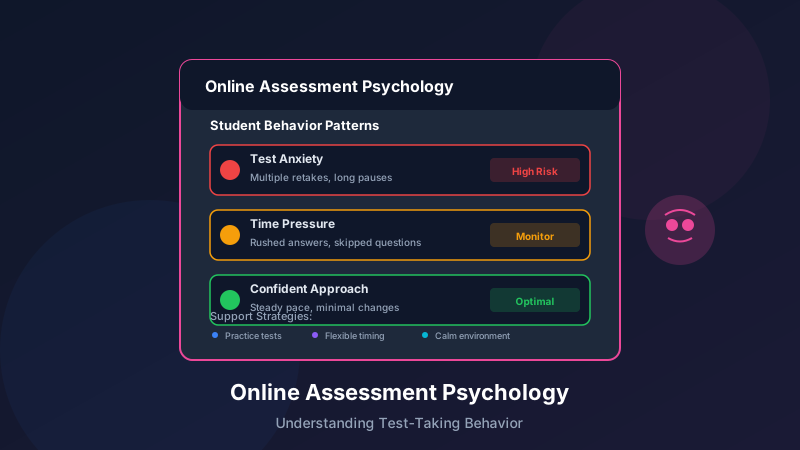
The Psychology of Effective Online Assessment Design
The shift to digital assessment has created both opportunities and challenges. Understanding the psychological principles behind effective test design helps educators create assessments that accurately measure learning, reduce anxiety, and provide meaningful feedback for improvement.
The Purpose of Assessment
Beyond Grading
Effective assessment serves multiple purposes:
Diagnostic: Identify strengths and gaps before instructionFormative: Guide ongoing teaching and learningSummative: Evaluate learning at the end of a unitEvaluative: Inform program and curriculum decisionsThe Learning Connection
Assessment should promote learning, not just measure it:
Retrieval practice strengthens memoryFeedback guides improvementSelf-assessment builds metacognitionGoals motivate effortPsychological Principles for Assessment Design
1. Cognitive Load Theory
Working memory has limits. Reduce unnecessary cognitive demands:
Reduce Extraneous Load:
Clear, simple instructionsClean visual designLogical organizationFamiliar interface elementsManage Intrinsic Load:
Build from simple to complexScaffold challenging contentProvide examples when helpfulAllow adequate timeOptimize Germane Load:
Focus on meaningful learningEncourage deep processingConnect to prior knowledgePromote transfer2. Testing Effect
Retrieval enhances learning:
Taking tests improves retention more than restudyingLow-stakes practice tests boost final performanceFeedback amplifies the effectSpaced testing optimizes resultsApplication:
Frequent low-stakes quizzesPractice tests before high-stakes examsImmediate corrective feedbackRetrieval practice throughout learning3. Desirable Difficulties
Some challenges enhance learning:
Varied practice conditionsInterleaved contentGeneration of answers (not just recognition)Spacing between practiceBalance Required:
Challenging enough to promote effortNot so difficult as to discourageSuccess within reach with effortScaffolded appropriately4. Test Anxiety
Anxiety impairs performance:
Sources of Test Anxiety:
Fear of failureHigh stakesUnfamiliar formatsTime pressureSocial evaluationMitigation Strategies:
Reduce stakes where possibleFamiliarize with formatsProvide adequate timeCreate supportive environmentsTeach anxiety management5. Motivation Theory
Assessment affects motivation:
Autonomy:
Offer choices when possibleExplain assessment purposesInvolve students in criteria developmentCompetence:
Ensure success is possibleProvide clear feedbackCelebrate growth and progressRelatedness:
Create collaborative assessmentsConnect to real-world contextsBuild supportive communityDesigning Valid Online Assessments
Construct Validity
Measure what you intend to measure:
Align items to learning objectivesAvoid construct-irrelevant varianceUse appropriate item typesPilot and revise itemsContent Validity
Cover the domain adequately:
Sample content representativelyInclude various difficulty levelsAssess different cognitive levelsBalance breadth and depthReliability
Ensure consistent measurement:
Use sufficient itemsWrite clear, unambiguous questionsStandardize administrationTrain raters for subjective itemsFairness
Remove bias and barriers:
Use inclusive languageRepresent diverse perspectivesAccommodate different abilitiesProvide equal access to technologyOnline Assessment Item Types
Selected Response
Multiple Choice:
Clear, focused stemsPlausible distractorsSingle best answerAvoid "all of the above"True/False:
Unambiguous statementsAvoid double negativesBalance true and falseConsider confidence ratingsMatching:
Homogeneous contentMore options than stemsLogical organizationClear instructionsConstructed Response
Short Answer:
Specific, focused promptsClear length expectationsModel answer developmentConsistent scoring criteriaExtended Response:
Authentic tasksRubric developmentMultiple drafts when possiblePeer review integrationTechnology-Enhanced Items
Drag and Drop:
Clear placement zonesSufficient target sizeLogical organizationMobile-friendly designSimulations:
Authentic contextsMeaningful interactionsAppropriate complexityClear objectivesMultimedia Items:
High-quality mediaAccessible alternativesRelevant contentAppropriate lengthReducing Test Anxiety Online
Before the Assessment
Preparation:
Practice with similar formatsReview expectations clearlyTeach test-taking strategiesAddress technology concernsEnvironment:
Quiet, comfortable spaceReliable technologyMinimize distractionsAllow practice loginsDuring the Assessment
Design Features:
Clear progress indicatorsAdequate time allowancesOption to review and change answersSave functionalitySupport:
Technical help availableClear communication channelsAccommodations implementedCalm, supportive toneAfter the Assessment
Feedback:
Timely resultsConstructive commentsGrowth focusNext steps guidanceReflection:
Process debriefingStrategy evaluationEmotion processingGoal settingFeedback That Promotes Learning
Characteristics of Effective Feedback
Timely:
Immediate when possibleBefore next learning opportunityWhile context is freshRegular and consistentSpecific:
Targeted to particular elementsConnected to criteriaActionable and clearFocused on prioritiesConstructive:
Balance praise and criticismFocus on work, not personSuggest improvementsMaintain relationshipsGoal-Referenced:
Connected to learning objectivesCompared to criteria, not peersShows path to improvementCelebrates progressFeedback Formats
Automated Feedback:
Immediate for objective itemsExplanations for correct answersHints for incorrect responsesResources for further learningInstructor Feedback:
Personalized commentsAudio or video optionsRubric-based scoringDialogue opportunitiesPeer Feedback:
Structured protocolsClear criteriaReciprocal benefitsTeacher moderationAccommodations and Accessibility
Universal Design for Assessment
Build accessibility from the start:
Multiple means of representationMultiple means of actionMultiple means of engagementFlexible timing and formatCommon Accommodations
Timing:
Extended timeFlexible schedulingBreaks during testingChunked administrationSetting:
Quiet environmentReduced distractionsFamiliar locationSmall group testingFormat:
Text-to-speechLarge print or zoomAlternative input methodsReduced answer choicesResponse:
Oral responsesScribe servicesAssistive technologyAlternative productsDigital Accessibility
Technical requirements for online assessments:
Screen reader compatibilityKeyboard navigationColor contrastCaption and transcript availabilityMobile device supportData-Driven Assessment Improvement
Item Analysis
Evaluate question quality:
Difficulty Index: Proportion answering correctlyDiscrimination Index: How well items differentiate learnersDistractor Analysis: Effectiveness of wrong answersResponse Time: Appropriateness of time requirementsAssessment Review
Improve over time:
Analyze overall resultsIdentify problematic itemsGather student feedbackRevise and retestContinuous Improvement
Build assessment quality:
Document item performanceCreate item banksShare best practicesTrain assessment writersEthical Considerations
Academic Integrity
Prevent cheating while maintaining trust:
Design Strategies:
Randomize questions and answersCreate equivalent test formsUse time limits appropriatelyRequire show-your-workProctoring Options:
Live virtual proctoringAI-based monitoringHonor code agreementsOpen-resource formatsCultural Approach:
Build integrity cultureExplain importanceModel ethical behaviorAddress violations fairlyData Privacy
Protect student information:
Secure test platformsLimited data retentionClear privacy policiesFERPA complianceBias Prevention
Ensure fair assessment:
Diverse item review panelsStatistical bias analysisInclusive contentMultiple assessment opportunitiesConclusion
Effective online assessment design requires understanding both the technology and the psychology of learning. By applying cognitive science principles, reducing anxiety, providing meaningful feedback, and ensuring fairness, we create assessments that not only measure learning but enhance it.
The goal is not just to evaluate students but to help them grow. When assessment is designed with psychological principles in mind—and delivered through a well-configured assessment platform—it becomes a powerful tool for learning, not just measurement. Online tutoring and test prep providers can particularly benefit from these insights.