Franchise vs Independent Learning Center: Which Is Right for You?
If you are planning to open a learning center, one of the first and most consequential decisions you will face is whether to buy into a franchise or build your own independent brand from scratch.
Both paths can lead to a successful, profitable education business. But they come with fundamentally different tradeoffs in terms of cost, control, support, and growth potential. The right choice depends on your background, budget, risk tolerance, and long-term vision.
This guide provides an honest, balanced comparison to help you make an informed decision.
Understanding the Two Models
The Franchise Model
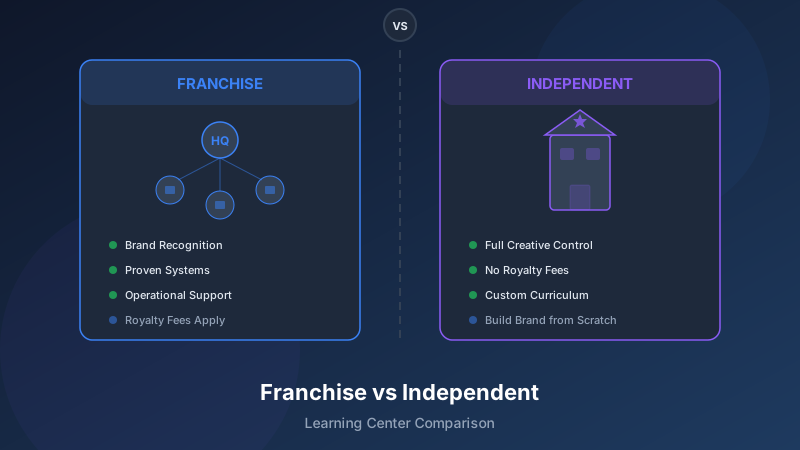
When you buy a franchise, you are essentially purchasing the right to operate under an established brand. You get access to the franchisor's curriculum, operating systems, marketing, and ongoing support. In exchange, you pay an upfront franchise fee and ongoing royalties (typically a percentage of revenue). For a detailed walkthrough of the franchise path, see our complete guide to starting a franchise learning center.
You own your location and manage your staff, but you operate within the guardrails set by the franchisor. Everything from your signage and marketing materials to your teaching methods and pricing may be dictated or heavily influenced by the franchise agreement.
The Independent Model
When you open an independent learning center, you start from zero. You create your own brand, develop or license your own curriculum, build your own systems, and make every operational decision yourself.
You have complete control, but you also bear complete responsibility. There is no corporate team to call when you have a question, no established brand for families to recognize, and no playbook to follow.
Cost Comparison
Franchise Costs
Here is a realistic breakdown of what you can expect to invest in a franchise learning center:
Franchise fee: $20,000 - $60,000 (one-time)Build-out and equipment: $30,000 - $150,000Initial inventory and materials: $5,000 - $15,000Technology and software: Often included in franchise fees or a required platformWorking capital: $30,000 - $80,000 (for first 6-12 months)Total initial investment: $80,000 - $300,000+Ongoing costs:
Royalties: 7-10% of gross revenue (monthly)Marketing fund: 1-3% of gross revenue (monthly)Technology fees: $200 - $1,000/month (if not included in royalties)Required purchases: Some franchisors require you to buy materials, assessments, or supplies from approved vendorsIndependent Center Costs
Brand development: $3,000 - $15,000 (logo, website, marketing materials)Build-out and equipment: $20,000 - $100,000Curriculum development or licensing: $5,000 - $30,000Technology and software: $2,000 - $10,000 (setup) + $200 - $1,000/monthInitial marketing: $5,000 - $20,000Working capital: $30,000 - $80,000Total initial investment: $50,000 - $200,000+Ongoing costs:
No royalties: You keep 100% of revenue (minus operating costs)Marketing: You fund all marketing yourself, typically 5-10% of revenueTechnology: You select and pay for your own platformsCurriculum updates: You are responsible for keeping content currentThe Bottom Line on Costs
The franchise model has a higher upfront and ongoing cost, but it comes with infrastructure that would take significant time and money to build independently. The independent model costs less initially but requires more investment in areas the franchise would have covered.
Brand Recognition and Trust
Franchise Advantage
One of the strongest arguments for franchising is instant brand recognition. When a parent sees a Kumon, Mathnasium, or Sylvan sign, they immediately know what to expect. This trust has been built over years or decades by the franchisor through national advertising, consistent quality, and broad market presence.
For a new franchise location, this translates to:
Faster initial enrollmentHigher trust from day oneEasier local marketing (you are amplifying an existing brand, not building one)Credibility with schools, community organizations, and referral partnersIndependent Reality
As an independent center, you are building trust from scratch. No one knows your name, your methods, or your results yet.
This means:
Slower initial enrollment (typically 6-12 months to reach sustainable numbers)Heavy reliance on local marketing and word-of-mouthThe need to prove yourself to every parent individuallyMore effort required to establish partnerships and credibilityHowever, independent centers that invest in strong branding, consistent marketing, and excellent results can build formidable local reputations. Many independent centers become the dominant player in their community over time, precisely because they feel more personal and locally connected than a national chain.
Operational Support
What Franchises Provide
Initial training: Typically 1-4 weeks of comprehensive training covering operations, curriculum delivery, sales, and systemsOngoing support: Regional managers, support hotlines, online portals, and peer networksOperational playbook: Detailed manuals covering every aspect of running the centerTechnology platform: Many franchisors provide or require a specific management platformMarketing campaigns: National and regional advertising, plus local marketing templatesCurriculum updates: The franchisor keeps instructional content currentWhat Independents Must Build
Your own training program: For yourself and every new hireYour own operations manual: Documenting every process and procedureYour own technology stack: Selecting, integrating, and maintaining multiple software toolsYour own marketing strategy: From brand development to campaign executionYour own curriculum: Either developing original content or licensing from third partiesYour own support network: Finding mentors, joining industry associations, and learning from peersThis is where the franchise model genuinely shines for first-time education business owners. The operational infrastructure you receive can save years of trial and error.
But for experienced educators or business owners, building these systems independently can result in a more tailored, efficient operation.
Flexibility and Control
Franchise Constraints
Franchise agreements come with significant restrictions:
Curriculum: You must use the franchisor's programs, often with little room for customizationPricing: The franchisor may set or strongly influence your pricing structureBranding: All signage, marketing, and communications must follow brand guidelinesTerritory: You can only operate within your assigned territoryVendors: You may be required to purchase from approved suppliersHours and operations: The franchisor may dictate operating hours and staffing requirementsExit: Selling your franchise requires franchisor approval and often comes with transfer feesIndependent Freedom
As an independent owner, you control everything:
Curriculum: Choose, develop, or mix and match programs based on what works for your studentsPricing: Set your own rates based on your market and value propositionBranding: Create a brand that reflects your vision and resonates with your communityPrograms: Add, modify, or discontinue programs at willPartnerships: Work with any vendor, supplier, or partner you chooseExit: Sell, expand, or close your business on your own termsThis flexibility is especially valuable in diverse or rapidly changing markets where being able to adapt quickly is a competitive advantage.
Growth Potential
Franchise Growth Path
Multi-unit ownership: Many franchisors actively encourage existing owners to open additional locationsDefined expansion process: The franchisor has a proven playbook for opening new locationsFinancing advantage: Lenders are often more willing to finance franchise expansion due to lower perceived riskTerritory availability: Growth is limited by available territories in the franchise systemIndependent Growth Path
Unlimited potential: No territory restrictions or franchisor approval neededCreate your own franchise: Successful independent centers can eventually franchise their own modelDiversify offerings: Expand into online tutoring, corporate training, test prep, or other verticals without restrictionsBuild equity: An independent brand you build is entirely your assetTechnology as the Growth Enabler
Regardless of which model you choose, technology is what makes scaling possible. A single-location operation can get by with spreadsheets and basic tools. But the moment you start thinking about multiple locations, you need a centralized platform that provides:
Unified student and enrollment management across locationsCentralized billing and financial reportingConsistent curriculum delivery and quality monitoringMulti-location scheduling and resource allocationConsolidated analytics and dashboardsThis is true whether you are a franchisee opening your third location or an independent owner expanding to a second center. A platform like Calimatic is designed for exactly this scenario, giving both franchise networks and independent multi-location operators the infrastructure they need to scale without operational chaos.
Risk Factors
Franchise Risks
Franchisor dependency: If the franchisor makes bad decisions, your business suffersBrand damage: A scandal or quality issue at another franchise location can affect your reputationFinancial obligations: Royalties and fees are owed regardless of your profitabilityFranchise failure: If the franchisor goes bankrupt, you may lose your brand and support systemContractual lock-in: Exiting a franchise agreement early can be expensive and legally complicatedIndependent Risks
No safety net: Every mistake is entirely your own to manage and recover fromSlower start: Without brand recognition, it takes longer to build enrollmentIsolation: Without a franchise support network, you may feel alone in facing challengesHigher marketing burden: You must generate all awareness and leads yourselfCurriculum quality: Without a proven curriculum, student outcomes depend entirely on your program designWhen Does Each Model Make More Sense?
Choose a Franchise If:
You are new to the education business and want a proven playbookYou have the capital to invest in franchise fees and ongoing royaltiesBrand recognition and faster initial enrollment are important to youYou prefer structure and support over complete autonomyYou want to minimize the risk of making costly operational mistakes early onYou are comfortable operating within defined guidelinesChoose Independent If:
You have significant experience in education and/or business managementYou have a unique educational approach or curriculum you want to implementYou value complete control over every aspect of your businessYou want to keep 100% of your revenue (minus operating costs)You are comfortable building systems, processes, and a brand from scratchYou have a long-term vision that might include franchising your own brand somedayThe Hybrid Approach
Some entrepreneurs take a hybrid approach: they start with a franchise to learn the business, then open independent locations later using the knowledge and experience they gained. Others start independently and later franchise their model once they have proven it works.
There is no single right answer. What matters is choosing the path that aligns with your skills, resources, and goals.
Questions to Ask Yourself
Before making your decision, honestly answer these questions:
How much capital do I have available, and how much ongoing expense can I absorb?Do I have direct experience running an education business?How important is brand recognition in my target market?Am I comfortable following someone else's playbook, or do I need to do things my way?What is my 5-year vision? One location? Three? Ten?How much risk am I willing to accept?Do I have a unique educational philosophy or method I want to implement?How much support do I need in areas like marketing, operations, and curriculum?Making the Decision
Here is a simple framework:
If you score high on experience, capital flexibility, and desire for control, lean independent.If you score high on need for support, faster launch timeline, and comfort with structure, lean franchise.If you are somewhere in the middle, consider visiting both franchise and independent learning centers, talking to owners on both sides, and making a decision based on which environment energizes you more.Final Thoughts
Both franchise and independent learning centers can be tremendously successful businesses that make a real difference in children's lives. The franchise model offers a faster, more supported path with less guesswork. The independent model offers more freedom, more upside, and more creative fulfillment.
What both models share is the need for excellent execution: great teachers, engaged parents, strong community connections, and reliable technology that keeps everything running smoothly. No matter which path you choose, invest in the tools and people that will allow you to deliver an outstanding educational experience. That is what ultimately drives enrollment, retention, and long-term success. For proven tactics on growing your student base, explore our 12 strategies to increase enrollment.